Plain language at the touch of a button: can AI do it?
Read story
Teaser: Some barriers are obvious, like a staircase without a ramp. Others go unnoticed by most people, from websites that do not work with a screen reader to prejudice in everyday encounters. This article shows the most common visible and invisible barriers in everyday life and what everyone can do about them.
Imagine you need to catch a train. The station is crowded, the announcement is hard to understand, and the only way to the platform is a staircase. For many people, this is a minor annoyance. For a wheelchair user, someone who is hard of hearing or a parent with a pram, it can mean missing the train.
Situations like this affect far more people than many assume. According to the World Health Organization, around 1.3 billion people worldwide, about 16% of the global population, live with a significant disability. In the EU, around 90 million people aged 16 and over have a disability – roughly one in four adults, according to Eurostat figures published by the Council of the EU. On top of that, many older people and people with temporary impairments, such as a broken leg, face the same barriers every day.
Removing these barriers is not a favour – it is a matter of disability rights. The UN Convention on the Rights of Persons with Disabilities (CRPD) builds on the Universal Declaration of Human Rights and makes clear that people with disabilities have the same right to take part in society as everyone else.
Barriers come in many forms: physical, digital, communicative and social. Some are easy to spot. Others only become visible when you look at everyday life through someone else's eyes.
Physical barriers are the ones most people think of first. They are often easy to see, yet still very common:
Stairs without ramps or lifts: For wheelchair users and people with walking difficulties, a single step can be impossible to overcome. Missing lifts also affect older people and parents with prams.
Inaccessible public transport: Buses without low floors, a gap between train and platform or broken lifts at stations make inclusive travel impossible for many people.
Narrow doors and passageways: Doors that are too narrow or heavy block people using wheelchairs, walkers or crutches.
Uneven floors and surfaces: Cobblestones, potholes or sudden changes in level, common outdoors and in older buildings, are a risk for people with reduced mobility. Others rarely notice them.
Blocked or missing guidance strips: Tactile paving guides blind and visually impaired people through stations and streets. When bicycles, e-scooters or advertising signs block them, they become useless.
Missing tactile and audible signals: Pedestrian crossings without audible signals or tactile markers make it difficult for blind people to cross safely.
Sensory overload: Loud music, bright lights and crowds can exclude autistic people or people with sensory processing difficulties. Quiet hours in shops and museums show how easy it can be to make a difference.
Shopping, banking, booking a doctor's appointment, applying for a job: more and more of everyday life happens online. That makes digital barriers just as serious as physical ones. They are often harder to spot, though, because they only become apparent when someone uses a website differently.
A test by Aktion Mensch from June 2025 shows how widespread they are. Only 20 of the 65 most-visited online shops in Germany could be used entirely with a keyboard. Missing keyboard focus, low contrast and cookie banners that cannot be closed were among the most common problems.
In our accessibility audits at Eye-Able, we see the same barriers again and again:
Missing support for assistive technologies: Many people use screen readers, voice navigation or screen magnifiers to get around online. Buttons without a label, headings that are only visually bold and images without alt text leave blind users guessing. Our article on alt text for images shows how to describe images properly.
Mouse-only operation: Menus, sliders or cookie banners that cannot be used with a keyboard exclude people with motor impairments and screen reader users.
Low contrast: Light grey text on a white background is hard to read for people with low vision – and for anyone looking at their phone in bright sunlight.
Inaccessible forms: Missing labels, vague error messages and complicated CAPTCHAs often stop people at the last step. Our guide to accessible online forms explains how to avoid this.
Videos without captions: Deaf and hard of hearing people miss the content if there is no captioning or transcript.
Complex navigation and difficult language: Confusing menus and long, complicated sentences make it hard for people with cognitive impairments to find information – and for everyone else, too.
Legislators have recognised the problem. Since 28 June 2025, the European Accessibility Act has required many digital products and services in the EU, such as online shops and banking services, to be accessible. In Germany, it was implemented through the Barrierefreiheitsstärkungsgesetz (BFSG). The technical basis is the WCAG standards, the Web Content Accessibility Guidelines.
Information is only useful if people can understand it. Communication barriers arise when information is offered in only one form:
No sign language or captions: For many deaf people, sign language is their first language. Without interpreters or captions, events, appointments and videos remain inaccessible.
Difficult language: Official letters, contracts or instructions in complex language exclude people with learning difficulties, people with cognitive impairments and non-native speakers. Plain language helps everyone.
Announcements only by voice or only on screens: Information at stations or airports should always be available both visually and audibly.
Inaccessible election information: Voting is the most basic form of civic participation. Yet even when polling stations are step-free, information about candidates, party programmes or the polling station itself is often not available in Braille, audio or easy-to-read formats.
Some of the most persistent barriers cannot be seen at all, because they exist in people's minds:
Prejudice and stigma: Assumptions about what people with disabilities can or cannot do limit their opportunities at school, at work and in everyday life. Discriminatory language, such as "suffering from" a disability or being "confined to a wheelchair", reinforces these assumptions.
Invisible disabilities: Mental health conditions, chronic illnesses and many sensory impairments cannot be seen. People affected often have to justify themselves or are simply not believed when they ask for support.
Lack of awareness: Many barriers exist simply because nobody thought about them. A café that refuses a guide dog or charges extra cleaning fees is a typical example.
Discrimination at work: Inaccessible application processes or a lack of reasonable adjustments keep qualified people out of jobs.
Education, encounters and empathy are the most effective ways to reduce social barriers. Awareness days such as the European Day of Persons with Disabilities, held around 3 December, and public perception campaigns help to change public attitudes step by step.
Removing barriers does not only help people with disabilities. Ramps help parents with prams and travellers with suitcases. Captions help people watching videos on a train without headphones. Clear language and good contrast make websites easier for everyone to use. Accessibility is not a special solution for a few – it makes everyday life better for all.
Inclusion is a community effort, and everyone can help to remove barriers. Keep guidance strips and entrances clear, offer help without imposing it, and ask what someone actually needs. If you create content, think about captions, alt text and clear language from the start.
At Eye-Able, digital accessibility is what we work on every day. We share what we learn in our blog and our webinars, and our Web Accessibility Index shows how accessible the world's most-visited websites are. Because the more people recognise barriers, the faster they disappear.
Curious how accessible your own website is? Our free accessibility check gives you a first overview in less than 2 minutes.
Barriers are obstacles that prevent people from taking part in everyday life on equal terms. They can be physical, such as stairs, digital, such as websites that do not work with a screen reader, communicative, such as missing captions, or social, such as prejudice.
Invisible barriers are obstacles that most people do not notice. Examples include difficult language, sensory overload in loud environments, a lack of understanding for mental health conditions, websites that cannot be used with a keyboard and prejudice against people with disabilities.
The most common digital barriers are missing alt text for images, low contrast, websites that cannot be used without a mouse, forms without labels and videos without captions. Many of them can be fixed with little effort.
People with disabilities are affected most, around 16% of the world's population according to the WHO. But barriers also affect older people, people with temporary impairments, parents with prams and anyone in a difficult situation, such as bright sunlight or a noisy environment.
In many cases, yes. Since 28 June 2025, the European Accessibility Act has required many digital products and services in the EU to be accessible, including online shops and banking services. Public sector websites in the EU have been required to be accessible for several years.
Keep paths and guidance strips clear, ask people what support they need and use clear language. If you publish content online, add alt text to images, captions to videos and make sure your website can be used with a keyboard.
Plain language at the touch of a button: can AI do it?
Read story
Talking to everyone about everything: a guide to inclusive language
Read story
What does an inaccessible website really cost?
Read story
Your WordPress site is never really finished: Why continuous maintenance matters
Read story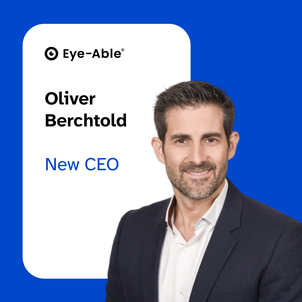
A New Leadership Team for Eye-Able: Oliver Berchtold Appointed CEO
Read story
HubSpot drops orange: how accessibility reshaped the CRM's design
Read story
AC Monza chooses Eye-Able for digital accessibility
Read story
How to make your website EAA-compliant in 8 steps
Read story
Looking back at the 2026 World Cup: How accessible was the tournament really?
Read story
Accessibility warnings in Austria? What European businesses need to know
Read story
Groundbreaking new AI-powered tests come to Eye-Able Audit
Read story
One year of the EAA: Where businesses still fall short
Read story
