:no_upscale())
Il nuovo design di HubSpot dice addio all'arancione: le ragioni legate all’accessibilità
Leggi la storia
 La tua azienda è conforme alla legge europea sull'accessibilità?
Accesso 450 milioni di clienti nel mercato unico europeo Si tratta di un'enorme opportunità. Tuttavia, da giugno 2025, è accompagnata da una nuova condizione. Per le aziende con sede negli Stati Uniti, nel Regno Unito o in Svizzera, la sfida non si limita più alla logistica o alla localizzazione. L'accessibilità digitale è diventata un requisito legale.
IL Legge europea sull'accessibilità (UE 2019/882) La legge, adottata dal Parlamento europeo e attuata dalla Commissione europea, rappresenta un importante cambiamento legislativo volto ad armonizzare i requisiti di accessibilità in tutto il mercato interno dell'UE e a migliorare l'accesso al mercato per i consumatori europei.
Il pieno sviluppo dell'EAA e del BFSG tedesco significa che le regole di ingaggio sono cambiate. Il semplice rispetto degli standard nazionali, come l'ADA o il Legge britannica sull'uguaglianza del 2010 non garantisce la conformità in Europa.
La posta in gioco è alta. Non si tratta più solo di potenziali cause legali, ma di un intervento diretto del governo. Le autorità possono ora infliggere multe o persino imporre la rimozione dei vostri prodotti digitali.
Questa guida illustra nel dettaglio come verificare i propri contenuti e garantire la conformità alle normative EAA in tutta l'Unione Europea.
 Comprendere la normativa UE in materia di accessibilità
 Per orientarsi in questo panorama, è innanzitutto necessario comprenderne la gerarchia. Il quadro di riferimento generale è l'Atto europeo di accessibilità (AEA). Questa direttiva armonizza le norme in tutti gli Stati membri per agevolare gli scambi transfrontalieri. Tuttavia, le direttive non sono leggi di per sé: devono essere recepite nel diritto nazionale.
In Germania, questa implementazione è la Barrierefreiheitsstärkungsgesetz (BFSG) Per le aziende internazionali, questa distinzione è fondamentale. Mentre la normativa europea sull'accessibilità stabilisce i parametri di riferimento, sono gli organismi nazionali di controllo (come quelli tedeschi) a verificare i servizi digitali offerti.
Ciò si applica ugualmente alle piattaforme di e-commerce, ai fornitori di SaaS e ai servizi digitali offerti ai consumatori dell'UE, indipendentemente da dove abbia sede l'azienda.
Comprendere queste differenze è essenziale per raggiungere e mantenere la conformità con l'AEA in quanto azienda extra-UE.
Le aziende che si espandono nell'UE spesso presumono che la conformità alle leggi nazionali sull'accessibilità si trasferisca automaticamente. In pratica, questo è uno degli errori più comuni e costosi.
Per le aziende con sede negli Stati Uniti, nel Regno Unito o in Svizzera, questa distinzione è fondamentale: a differenza dell'European Accessibility Act, né l'ADA né l'Equality Act del Regno Unito codificano formalmente WCAG come legge vincolante. WCAG viene invece utilizzato come riferimento interpretativo piuttosto che come standard tecnico obbligatorio.
La legge europea sull'accessibilità adotta un approccio radicalmente diverso. Prevede requisiti tecnici specifici e verificabili e ne garantisce l'applicazione attraverso la sorveglianza del mercato anziché tramite azioni legali.
Per le aziende con sede negli Stati Uniti, l'accessibilità viene spesso vista attraverso la lente dell'Americans with Disabilities Act (ADA). Tuttavia, l'approccio europeo è fondamentalmente diverso Comprendere la dinamica tra EAA e ADA è fondamentale per una gestione efficace del rischio quando si opera nell'UE.
Negli Stati Uniti, la conformità all'accessibilità ai sensi dell'ADA viene in genere valutata caso per caso e l'applicazione della legge si basa principalmente su reclami o azioni legali. In pratica, molte organizzazioni intervengono per colmare le lacune in materia di accessibilità solo dopo l'avvio di un'azione legale, rendendo il modello in gran parte reattivo.
Ai sensi della Legge europea sull'accessibilità, la logica si inverte. L'applicazione delle norme è effettuata dalle autorità di vigilanza del mercato. , che verificano in modo proattivo i prodotti e i servizi digitali rispetto a standard tecnici vincolanti ( EN 301 549 Le autorità non aspettano le denunce dei consumatori e possono imporre sanzioni o limitare l'accesso al mercato dell'UE se i requisiti non vengono rispettati.
Il rispetto delle norme non è facoltativo né contingente, bensì una condizione per l'accesso al mercato.
 EAA contro Equality Act 2010: qual è la differenza?
 Per le aziende con sede nel Regno Unito, la conformità in materia di accessibilità è generalmente regolata dall'Equality Act 2010, che adotta un approccio basato su principi. La legge impone alle organizzazioni di apportare "modifiche ragionevoli" per evitare discriminazioni nei confronti delle persone con disabilità, lasciando spazio alla proporzionalità, al contesto e all'interpretazione.
Di conseguenza, la conformità all'Equality Act viene spesso valutata caso per caso, tenendo conto di fattori quali le dimensioni dell'organizzazione, le risorse disponibili e la fattibilità pratica. Sebbene WCAG sia comunemente utilizzato come quadro di riferimento, non è formalmente codificato come standard tecnico vincolante ai sensi della legge britannica.
La legge europea sull'accessibilità segue un modello fondamentalmente diverso. Richiede la conformità tecnica dimostrabile con standard definiti e verificabili (tramite EN 301 549) ed è attuato attraverso le autorità di vigilanza del mercato non attraverso reclami individuali. La conformità non è quindi una questione di ragionevolezza o di intenzione, ma una condizione preliminare per offrire prodotti e servizi digitali nel mercato dell'UE.
Per le aziende con sede in Svizzera, la distinzione è particolarmente critica. L'attuale Legge svizzera contro la discriminazione delle persone con disabilità (BehiG) Si concentra principalmente sulla prevenzione della discriminazione e sulla promozione della parità di accesso, ma non stabilisce requisiti di accessibilità digitale tecnicamente applicabili a livello di mercato, paragonabili a quelli dell'Atto europeo sull'accessibilità.
Di conseguenza, la conformità al BehiG non viene valutata attraverso audit tecnici sistematici e non funziona come condizione per l'accesso al mercato nello stesso modo. Sebbene gli standard di accessibilità riconosciuti possano fornire indicazioni sulle migliori pratiche in Svizzera, Il rispetto dei requisiti nazionali non può essere utilizzato come indicatore indiretto della conformità all'UE.
Sebbene la modifica prevista della legge svizzera BehiG dovrebbe rafforzare gli obblighi di accessibilità digitale e avvicinare la legislazione nazionale agli standard internazionali, Ciò non comporterà un allineamento automatico con l'European Accessibility Act o con i suoi meccanismi di applicazione. Le aziende svizzere che offrono prodotti o servizi digitali nell'UE dovranno quindi continuare a conformarsi direttamente ai requisiti previsti dall'accordo SEE.
Potresti chiederti: "Devo controllare le leggi di Francia, Italia e Spagna singolarmente?" La risposta breve è: No.
Because the BFSG is the German implementation of the harmonised European Accessibility Act, complying with it acts as a "regulatory passport" for the entire European Single Market. The technical standard underlying the BFSG (EN 301 549) is identical across the EU.
In effetti, considerare lo standard tedesco BFSG come punto di riferimento rappresenta un vantaggio strategico. La Germania è nota per la sua rigorosa interpretazione delle direttive UE. Se riesci a farlo in Germania, puoi farlo ovunque in Europa.
Garantendo che i vostri prodotti digitali soddisfino i rigorosi standard tedeschi, vi ponete automaticamente nella posizione ideale per ottenere la conformità all'EAA in tutti gli altri 26 Stati membri.
L'EAA si applica a una vasta gamma di prodotti e servizi accessibili, inclusi dispositivi fisici come computer, smartphone, sportelli automatici (ATM), terminali di pagamento, dispositivi POS e distributori automatici di biglietti utilizzati nei trasporti pubblici. Copre anche i servizi digitali come servizi bancari, piattaforme di e-commerce, servizi di telefonia, applicazioni mobili, piattaforme di telemedicina, portali self-service e sistemi di assistenza clienti.
Gli obblighi relativi ai media si estendono a televisori, apparecchiature televisive, guide elettroniche ai programmi, servizi audiovisivi e pubblicazioni digitali come e-book e lettori di e-book.
La conformità ai sensi dell'EAA viene misurata rispetto alle Linee guida per l'accessibilità dei contenuti web (standard WCAG), attualmente allineate con WCAG 2.1 Livello AA e in evoluzione verso WCAG 2.2 AAQuesti standard seguono i principi POUR (percettibile, utilizzabile, comprensibile e robusto) e coprono aspetti pratici come la dimensione del carattere, la spaziatura, i sistemi CAPTCHA e l'accessibilità dei contenuti multimediali preregistrati.
 Quali sono le sanzioni previste per la mancata conformità all'EAA?
 Molti dirigenti internazionali chiedono: quali sono le sanzioni per la mancata conformità all'EAA e con quale rigore vengono applicate? Poiché l'applicazione è gestita a livello nazionale, la severità varia, ma la Germania ha stabilito un precedente rigoroso con l'BFSG.
Il mancato rispetto dei requisiti può comportare tre conseguenze principali:
Multe In Germania, le sanzioni possono arrivare fino a 100.000 euro per violazione.
azioni dei consumatori : Le associazioni qualificate possono intentare causa per ottenere provvedimenti ingiuntivi o impegnarsi in cause legali di tipo collettivo .
Esclusione dal mercato Questo è il rischio più grave. Le autorità di vigilanza del mercato hanno il potere di vietare la vendita di un prodotto o servizio. Ciò significa che il tuo sito web potrebbe essere offline in Germania fino alla sua riparazione. —uno scenario disastroso per i ricavi e la reputazione del marchio.
 Come posso verificare la conformità dei miei contenuti esistenti agli standard EAA?
Considerati i rischi di esclusione dal mercato e le sanzioni, la domanda più urgente per i responsabili tecnici è: come posso verificare la conformità dei miei contenuti esistenti alle normative EAA?
Per colmare il divario tra gli standard ADA o del Regno Unito e le rigide normative tedesche BFSG è necessario un partner che parli entrambe le lingue, sia dal punto di vista legale che tecnico. È qui che entra in gioco Eye-Able. Il tuo esperto locale per il mercato europeo .
Comprendiamo le sfumature dell'ADA e dell'UK Equality Act e sappiamo esattamente dove non sono all'altezza dei nuovi regolamenti UE. Per colmare questo divario, Eye-Able offre una soluzione Una piattaforma olistica che combina test automatizzati, strumenti di intelligenza artificiale e consulenza di esperti. .
Ecco il quadro di riferimento collaudato che le aziende internazionali possono utilizzare per raggiungere e mantenere la conformità normativa:
La conformità non è un progetto una tantum; è uno stato continuo. I siti web cambiano: vengono aggiunti prodotti, vengono pubblicati articoli di blog.
Non eseguiamo una sola scansione. Il nostro Dashboard Eye-Able Esegue controlli automatici a intervalli regolari (ad esempio, settimanalmente o dopo gli aggiornamenti). Monitora l'intero dominio, assicurandosi che i nuovi contenuti non compromettano la conformità alle normative.
L'accordo BFSG si applica a tutti i contenuti digitali Ciò include brochure, white paper e fatture. I nostri strumenti verificano automaticamente i documenti PDF e altri contenuti digitali per garantire la conformità agli standard di accessibilità, proteggendoti da eventuali lacune di conformità nascoste.
L'automazione è veloce, ma individua solo circa l'80% dei problemi di accessibilità. Per una completa sicurezza legale ai sensi dell'BFSG, è necessaria la verifica umana.
Il nostro team di esperti di accessibilità esegue il test manuale Per te. Testiamo i flussi utente critici, come il processo di pagamento, utilizzando screen reader e navigazione tramite tastiera. Grazie alla nostra conoscenza delle specifiche differenze tra i protocolli di audit statunitensi ed europei, garantiamo che il tuo sito superi il vaglio delle autorità di vigilanza del mercato tedesche.
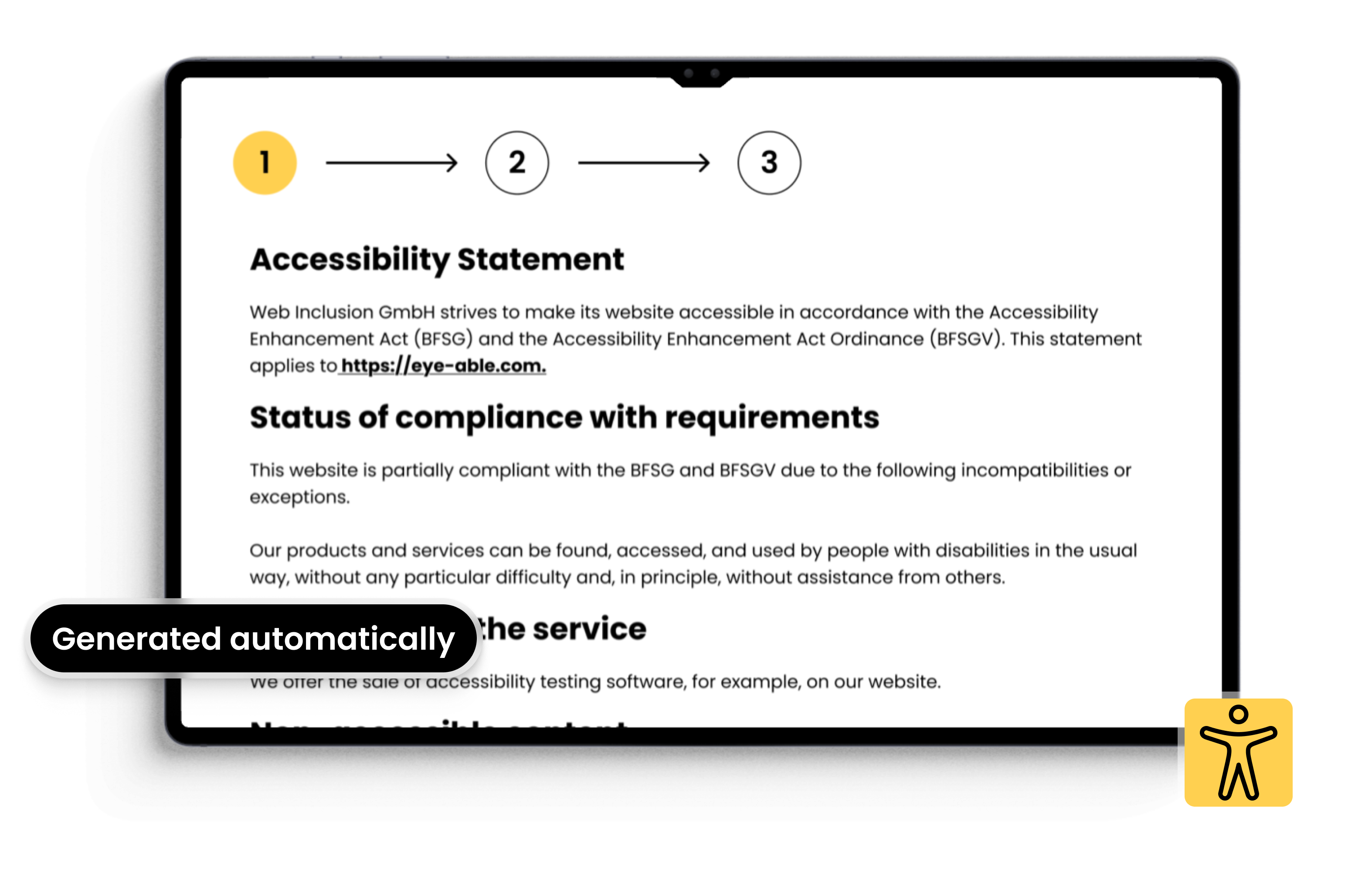
Ai sensi dell'EAA e dell'BFSG, la conformità tecnica deve essere accompagnata da dichiarazioni corrette e complete. Sei legalmente tenuto a pubblicare una dichiarazione dettagliata Dichiarazione di accessibilità (Barrierefreiheitserklärung) che divulga i problemi noti e i canali di contatto.
La redazione di questo documento richiede una profonda conoscenza giuridica degli standard BFSG. Eye-Able vi supporta nella generazione e nell'aggiornamento di una dichiarazione conforme, garantendo il rispetto dei requisiti burocratici oltre a quelli tecnici.
 4. Implementare tecnologie assistive
 Integrazione Eye-Able Assistenza L'integrazione diretta nel tuo sito web consente agli utenti di personalizzare immediatamente la visualizzazione in base alle proprie esigenze. Ciò ha un duplice scopo: migliora istantaneamente l'esperienza utente per le persone con disabilità e segnala alle autorità europee che la tua azienda prende sul serio l'inclusione digitale.
L'era dell'accessibilità digitale come optional è finita. Per le aziende svizzere, statunitensi e britanniche, la normativa europea sull'accessibilità rappresenta una scelta binaria: adeguarsi agli standard dell'EAA o rischiare di perdere l'accesso al mercato unico europeo.
Sebbene le sanzioni, che vanno dalle multe all'esclusione dal mercato, siano reali, l'opportunità è ben maggiore. Un sito web pienamente conforme non solo tiene lontane le autorità di vigilanza del mercato, ma apre la tua attività a milioni di utenti e migliora il posizionamento sui motori di ricerca e l'usabilità a livello globale.
Non aspettare che arrivi una lettera di avvertimento nella tua casella di posta.
Pronti ad assicurarvi una posizione nel mercato dell'UE?
Inizio con Un'analisi gratuita e automatizzata per identificare le aree del tuo sito web che non soddisfano i requisiti BFSG e EAA.
Il nuovo design di HubSpot dice addio all'arancione: le ragioni legate all’accessibilità
Leggi la storia:no_upscale())
AC Monza sceglie Eye-Able per l'accessibilità digitale
Leggi la storia:no_upscale())
Carrefour multata per sito non accessibile: la sentenza del 2026 dimostra che l’European Accessibility Act è ormai una realtà concreta per e-commerce e servizi digitali.
Leggi la storia:no_upscale())
Eye‑Able al Netcomm Forum 2026: l’accessibilità digitale come nuovo paradigma del digital commerce
Leggi la storia:no_upscale())
L’EAA si applica anche al settore B2B?
Leggi la storia:no_upscale())
Cos’è la Dichiarazione di Accessibilità e cosa cambia dal 28 giugno 2025
Leggi la storia:no_upscale())
Da gennaio 2026 la nuova piattaforma AGID sarà attiva.
Leggi la storia:no_upscale())
L'Accessibilità per Trenord scegliendo Eye-Able Italia
Leggi la storia:no_upscale())
La Lega Basket Serie A inizia il suo percorso di accessibilità con Eye-Able
Leggi la storia:no_upscale())
AIL: Inclusione digitale grazie ad Eye-Able
Leggi la storia:no_upscale())
Legge Stanca
Leggi la storia:no_upscale())
Cosa rende un sito davvero accessibile: 5 azioni concrete
Leggi la storiaContattaci e saremo lieti di aiutarti.
:no_upscale():format(png))
:no_upscale():format(png))