:no_upscale())
Een overlay maakt een website niet vanzelf toegankelijk
Lees verhaal
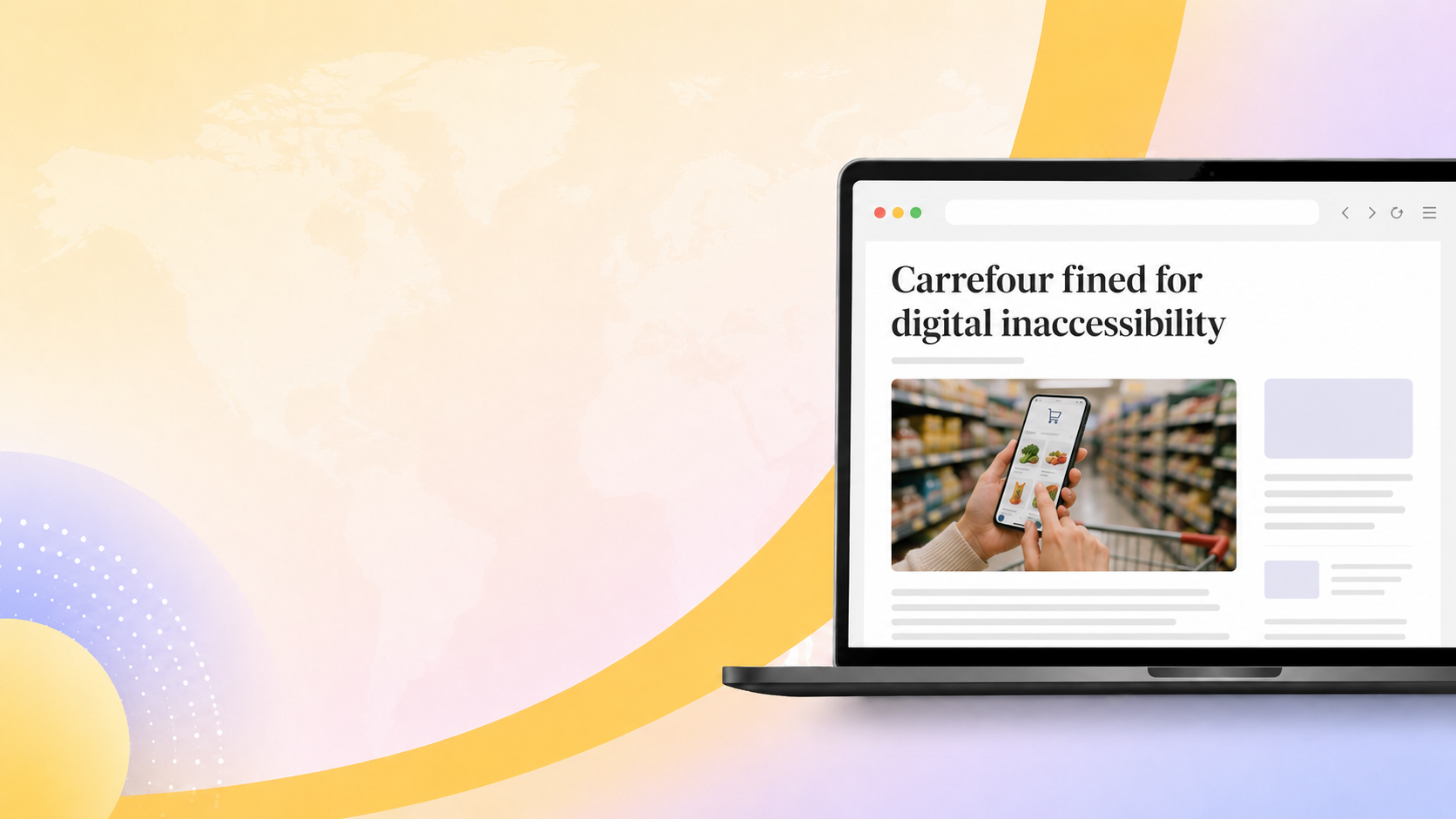 De Carrefour-zaak: wat leert deze ons werkelijk over toegankelijkheid?
Op 4 juni 2026 deed de rechtbank van Caen een baanbrekende uitspraak: Carrefour werd aansprakelijk gesteld voor de ontoegankelijkheid van haar online boodschappendienst.
Maar het zou te kort door de bocht zijn om alleen de fout van het bedrijf te benadrukken. Het werkelijke punt is anders: deze uitspraak laat zien dat de Europese Toegankelijkheidsverordening nu concreter is dan ooit – niet alleen als een wettelijke verplichting, maar als een antwoord op een reële behoefte die direct van invloed is op mensen, rechten en reputatie.
Het begon allemaal in 2025, toen de Franse brancheorganisaties ApiDV en Droit Pluriel melding maakten van wijdverspreide problemen met online boodschappendiensten in de hele detailhandel.
In het geval van Carrefour brachten tests uitgevoerd door blinde en slechtziende gebruikers concrete obstakels aan het licht:
onvermogen om correct te navigeren met schermlezers
gebrek aan alternatieve tekst voor afbeeldingen en knoppen
onvoldoende kleurcontrast
Moeite met het vinden van producten, prijzen en bezorgopties.
onvermogen om zelfstandig een aankoop te voltooien
Het ging hier niet om kleine technische gebreken, maar om een veel belangrijker probleem: de dienst was in de praktijk niet voor iedereen bruikbaar.
De rechtbank erkende deze situatie en legde het volgende op:
naleving binnen 6 maanden
Een boete van €500 per dag in geval van vertraging.
een schadevergoeding van € 10.000 aan de verenigingen voor collectieve schade
Maar het belangrijkste aspect is een ander: de rechter beoordeelde de daadwerkelijke gebruikerservaring, niet alleen de formele naleving van de normen.
Deze zaak herinnert ons aan iets fundamenteels: wanneer een dienst niet toegankelijk is, hebben we het niet over code, maar over mensen.
Voor veel blinden of slechtzienden is online boodschappen doen geen luxe, maar een essentieel hulpmiddel om zelfstandig te kunnen leven.
Als die dienst niet werkt:
onafhankelijkheid verloren
Er wordt tijd verspild.
Mensen worden gedwongen om hulp te vragen.
de keuzevrijheid wordt beperkt
De metafoor die tijdens de rechtszaak naar voren kwam, verklaart het perfect:
Een ontoegankelijke website is als een trap voor een rolsto gebruiker.
Sinds 28 juni 2025 is de toegankelijkheid van digitale diensten, waaronder e-commerce en apps, een wettelijke verplichting.
Sommige bedrijven hebben deze verschuiving als een kans aangegrepen, terwijl andere het als iets ver weg, complex of uitstelbaars hebben beschouwd.
Tegenwoordig is de boodschap echter duidelijk: toegankelijkheid is een recht en een concrete noodzaak.
De EAA maakt dit simpelweg expliciet en zorgt ervoor dat het wordt nageleefd.
De Carrefour-zaak is geen definitieve mijlpaal, maar een signaal.
Een signaal dat:
Europese regelgeving wordt in de praktijk toegepast.
De toegankelijkheid wordt beoordeeld op basis van de daadwerkelijke gebruikerservaring.
Van bedrijven wordt verwacht dat ze niet alleen technisch, maar ook cultureel reageren.
En bovenal, dat achter elke interface een verantwoordelijkheid schuilgaat.
Want nu meer dan ooit draait digitaal ontwerpen om het beantwoorden van een simpele vraag: kan het echt door iedereen gebruikt worden?
Ontdek of uw website voor iedereen werkt – test hem gratis met Eye-Able!
Een overlay maakt een website niet vanzelf toegankelijk
Lees verhaal:no_upscale())
Digitale toegankelijkheid en SEO: waarom ook Google van deze websites houdt
Lees verhaal:no_upscale():format(png))
"Digitale toegankelijkheid is nu geen prioriteit" - en dat kost je elke dag omzet
Lees verhaal:no_upscale():format(png))
Toegankelijkheid iPhone: zo haal je alles uit de toegankelijkheidsinstellingen
Lees verhaal:no_upscale():format(png))
Mobiele toegankelijkheid: ben jij er klaar voor?
Lees verhaal
AI accessibility: Hoe organisaties inclusieve digitale ervaringen maken
Lees verhaal:no_upscale():format(png))
Eye-Able als alternatief: wat organisaties écht nodig hebben
Lees verhaal:no_upscale())
Hoe kom ik aan een toegankelijkheidsverklaring voor de EAA?
Lees verhaal:no_upscale())
Wat is Alt Tekst voor obstakelvrij lezen van beelden?
Lees verhaal:no_upscale())
Hoe AI een handje helpt bij de Wet Digitale Toegankelijkheid
Lees verhaal:no_upscale())
Veelgemaakte fouten Wet Digitale Toegankelijkheid (EAA)
Lees verhaal:no_upscale())
De Wet Digitale Toegankelijkheid (EAA) voor het MKB: Zo krijg je je medewerkers mee!
Lees verhaalNeem contact met ons op en we helpen u graag verder.
:no_upscale():format(png))
:no_upscale():format(png))