:no_upscale())
¿Advertencias de accesibilidad en Austria? Lo que las empresas europeas deben saber ahora mismo
Leer historia
 Actúe ahora, antes de que comiencen las auditorías.
A partir de enero de 2026, la Marktüberwachungsstelle der Länder (MLBF) comprobará de forma constante y solicitará activamente pruebas de que las organizaciones cumplen con sus obligaciones de documentación. Esto se refiere a la documentación completa y rastreable de todas las medidas adoptadas para cumplir con los requisitos de la Ley alemana de resistencia a las barreras (BFSG) .
Para las organizaciones que aún no han adaptado sus productos digitales o físicos, ahora es el momento adecuado para actuar y registrar cada paso de forma transparente.
Este artículo explica qué es importante ahora y cómo puede asegurarse de que su documentación cumpla con la normativa.
El hecho es Documentación de accesibilidad de BFSG voluntad aún no está claro si estas auditorías serán anunciadas o no. Por ello, es fundamental comenzar el análisis cuanto antes y establecer un plan de acción claro.
Comience con un inventario: Identifique todos los productos y servicios que entran dentro de la categoría BFSG y revise qué medidas ya se han documentado.
Desarrolle una estrategia de auditoría: Decide cómo revisarás periódicamente tu contenido digital; por ejemplo, mediante una combinación de pruebas automatizadas, pruebas manuales con usuarios y herramientas con soporte de inteligencia artificial.
Documentar el cumplimiento y el progreso: Registre todas las medidas ya implementadas y añada las mejoras y los hitos previstos. Esto no solo demuestra el cumplimiento actual de BFSG, sino que también convierte su documentación en un registro vivo de accesibilidad continua.
Publique una declaración de accesibilidad: Proporcionar públicamente la información requerida en el Anexo 3 BFSG: accesible, fácil de encontrar y actualizada.
Establezca un sistema de almacenamiento seguro: Establezca un sistema interno que almacene su documentación de forma segura durante al menos cinco años y que permita acceder a ella en cualquier momento.
Mantén todo actualizado: Todo cambio en un producto o servicio debe documentarse de inmediato. Utilice el control de versiones y los registros de cambios para garantizar la transparencia de todas las modificaciones.
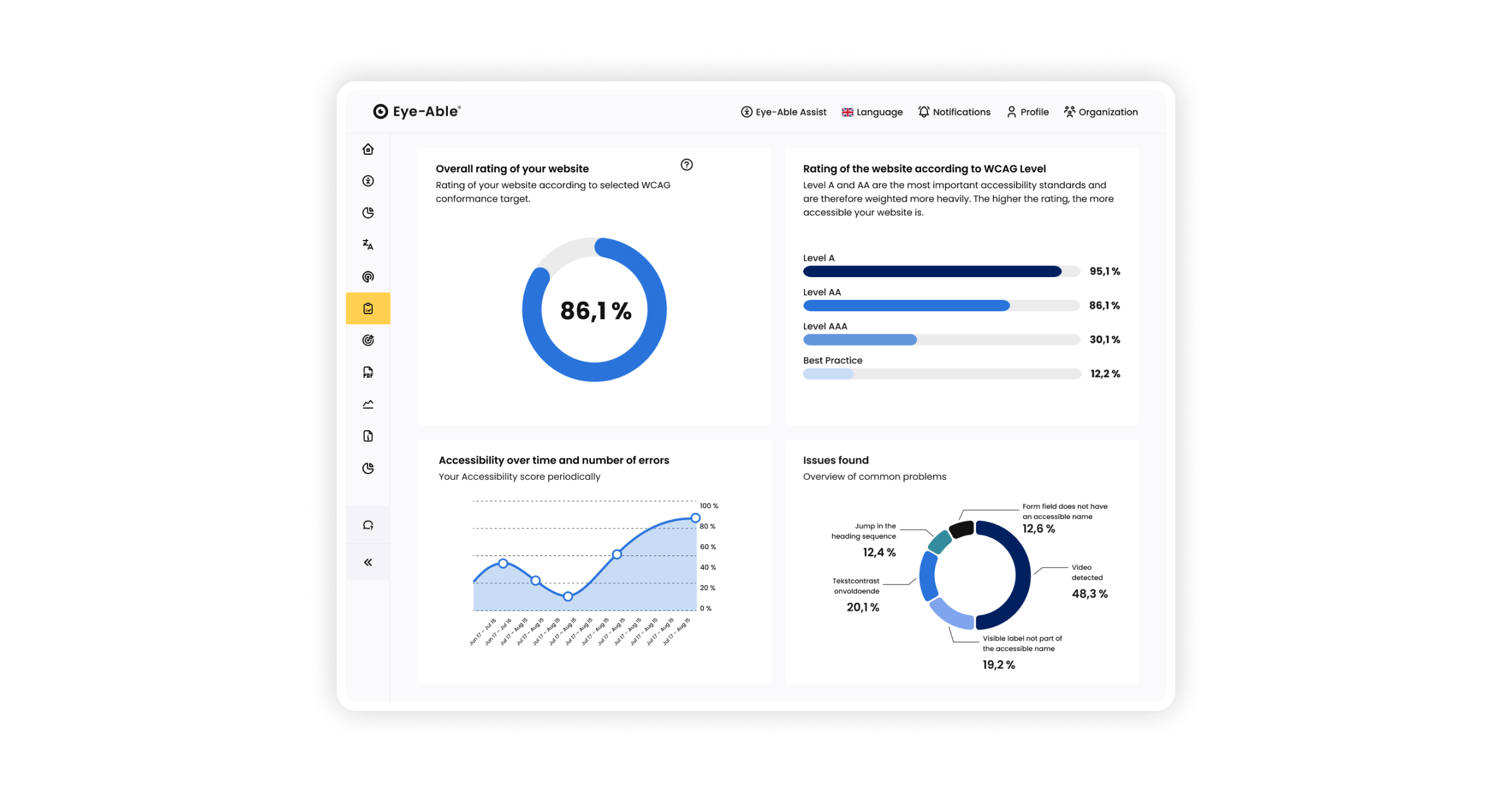
Eye-Able te ayuda: Con la plataforma Eye-Able, dispondrá de análisis, optimización, documentación y monitorización de sus medidas de accesibilidad, todo en un mismo lugar, lo que le garantizará estar preparado siempre que se realice una auditoría.
 ¿Cuáles son las consecuencias de la documentación incompleta o faltante?
La notificación BFSG no especifica un plazo fijo para la presentación de la documentación. En cambio, la autoridad de vigilancia del mercado establecerá un plazo adecuado para cada caso, y su duración es impredecible. Quienes reaccionen solo tras recibir dicha solicitud se verán sometidos a una gran presión de tiempo.
La falta de documentación o la documentación incompleta pueden conllevar una prohibición total de la distribución, por lo que deben evitarse a toda costa.
Además, el incumplimiento del requisito de documentación puede acarrear multas de hasta 100.000 euros.
La documentación es la prueba fundamental de que una organización cumple con los requisitos de accesibilidad o justifica cualquier desviación. Durante las inspecciones aleatorias, las autoridades de vigilancia del mercado solicitarán estos registros para verificar la conformidad de los productos y servicios. Sin una documentación adecuada, una organización no puede demostrar que actúa conforme a la ley.
Esta obligación se aplica a todos los fabricantes de productos y proveedores de servicios que entran dentro del ámbito de aplicación de la normativa BFSG; por ejemplo, bancos, proveedores de telecomunicaciones o empresas de comercio electrónico.
Puedes encontrar una descripción detallada en el artículo “ BFSG: ¿Quiénes se ven afectados? ”
La ley exige tres documentos: documentación técnica , información de accesibilidad y el Declaración de conformidad de la UE .
Sí. Debe estar disponible públicamente en un formato accesible y explicar a los usuarios cómo se cumplen los requisitos de accesibilidad. Importante: la declaración de accesibilidad complementa su documentación, no la reemplaza.
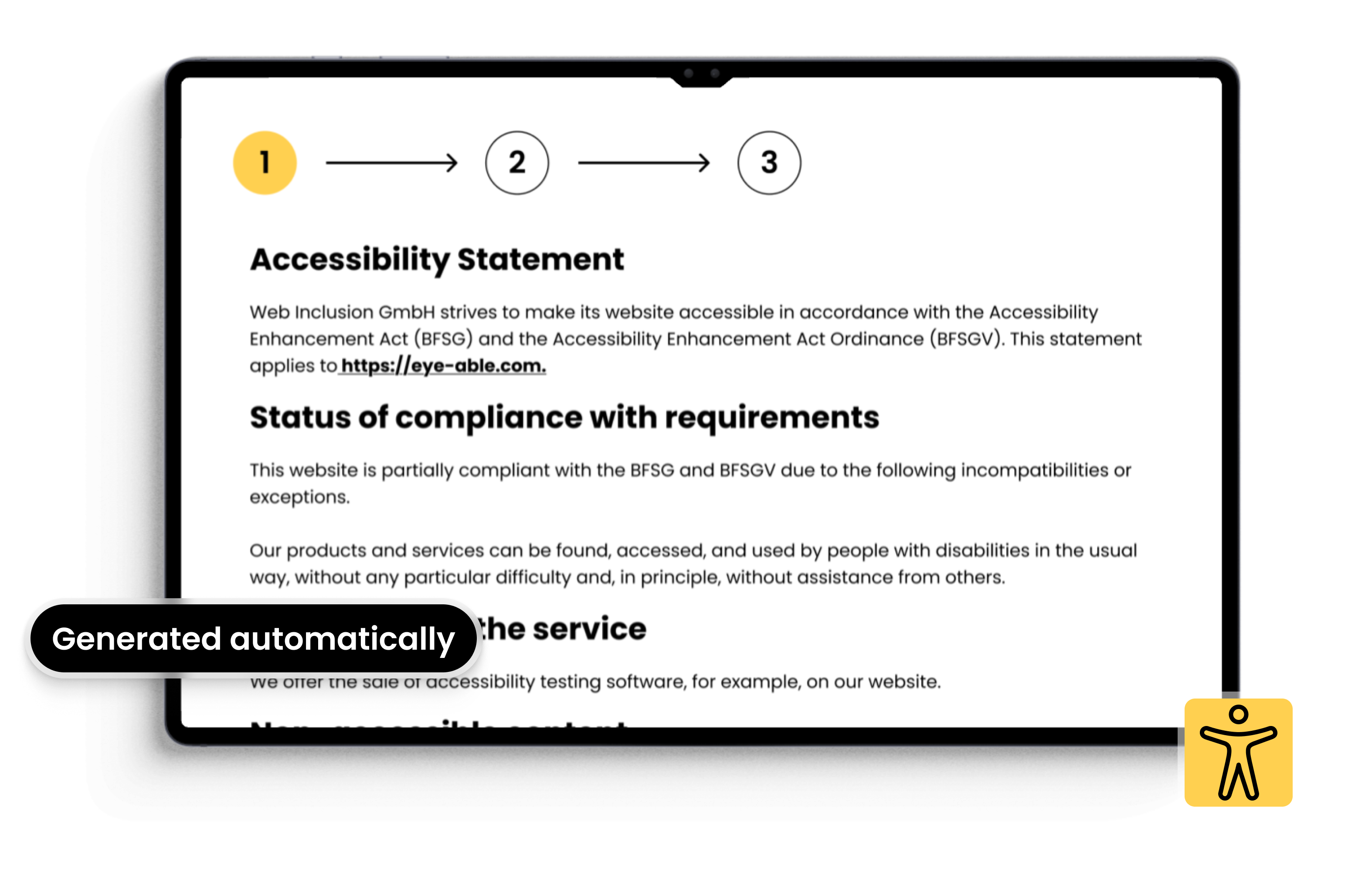
Con el Generador de Declaraciones de Accesibilidad Eye-Able, puede crear de forma rápida y sencilla una declaración de accesibilidad completa y que cumpla con la normativa vigente. Desarrollado en colaboración con un bufete especializado en derecho informático, protección de datos y medios de comunicación, el generador tiene en cuenta automáticamente los diferentes requisitos de los organismos públicos y las organizaciones privadas, incluidas las normativas específicas de cada país.
La información relevante de sus informes Eye-Able, las comprobaciones en PDF y los resultados de las pruebas guiadas se incluyen e integran automáticamente en el extracto. Puede añadir sus propios resultados de pruebas manuales en cualquier momento.
Cada vez que cambie su estado, Eye-Able actualizará automáticamente su extracto y le notificará las nuevas versiones.
 ¿Durante cuánto tiempo debe conservarse la documentación?
La documentación relativa a las medidas de accesibilidad debe estar disponible durante al menos cinco años después de que un producto salga al mercado, o durante toda la duración de un servicio.
Las organizaciones deben facilitar la búsqueda y el acceso a su información sobre accesibilidad; por ejemplo, en su sitio web (en el pie de página o en una página dedicada a la "Accesibilidad"), en sus términos y condiciones, o dentro de una aplicación o servicio digital.
Sí. Cualquier cambio en los productos o servicios debe documentarse de inmediato, independientemente de si implica contenido, funciones o archivos nuevos. Esto garantiza que siempre pueda demostrar qué partes de su sitio web o aplicación cumplen con la normativa vigente y qué elementos antiguos están archivados y ya no reciben mantenimiento.
Las exenciones solo son posibles en casos excepcionales y deben estar debidamente justificadas; por ejemplo, si ciertas medidas resultaran desproporcionadas. Las organizaciones deben explicar a la autoridad de vigilancia del mercado qué requisitos no pueden cumplir y por qué; la autoridad examinará esta justificación con detenimiento.
En primer lugar, mantenga la calma, pero actúe con rapidez. Una no conformidad formal significa que su documentación, según el Anexo 3 BFSG, está incompleta o no es accesible. Entre las razones más comunes se encuentran la falta de información o el hecho de proporcionar la información requerida en un formato inaccesible.
Con Eye-Able, no solo obtendrá potentes funciones y servicios para una accesibilidad digital integral, sino también una solución completa para una documentación que cumpla con la normativa legal.
Cada cambio y cada medida se documenta automáticamente, incluyendo la fecha y la hora. Esto significa que siempre podrá demostrar con exactitud cuándo se implementó cada paso. Su documentación no solo será completa, sino que también cumplirá con la normativa vigente y será totalmente transparente para la autoridad de vigilancia del mercado.
Concretamente, esto significa:
Evidencia automatizada: Todas las acciones quedan registradas y se les asigna una marca de tiempo.
Guía paso a paso: Las explicaciones claras y las recomendaciones concretas hacen que su documentación sea fácil de entender.
Siempre actualizado: Su declaración de accesibilidad se genera automáticamente, se actualiza periódicamente y se publica en un formato totalmente accesible.
Actualizaciones continuas: Las revisiones e informes periódicos garantizan que su documentación esté siempre actualizada.
Soporte experto de Eye-Able: Nuestros especialistas en accesibilidad y nuestro equipo de soporte trabajan directamente con usted para garantizar que su documentación permanezca completa y cumpla con la normativa.
Juntos, logramos que su documentación cumpla plenamente con la normativa BFSG de forma rápida, fiable y demostrable.
Descubre todas las características de la plataforma Eye-Able — incluyendo documentación compatible con BFSG.
¿Advertencias de accesibilidad en Austria? Lo que las empresas europeas deben saber ahora mismo
Leer historia:no_upscale())
Un año de la EAA: Dónde la mayoría de las empresas siguen fallando
Leer historia:no_upscale())
No, un overlay tool no hace que un sitio web sea accesible automáticamente
Leer historia:no_upscale())
Por qué los datos de producto accesibles mejoran la experiencia de usuario en eCommerce
Leer historia:no_upscale():format(png))
¿Se aplica la EAA al sector B2B?
Leer historia:no_upscale():format(png))
¿Cómo reconocer un sitio web realmente accesible?
Leer historia:no_upscale():format(png))
:no_upscale():format(png))