:no_upscale():format(png))
Halfpipe instead of hurdles - Sit’n’Skate
Read story
 Five facts about digital exclusion that should make us sit up
 For many people, online shopping is part of everyday life: a few clicks and the weekly groceries are sorted. Yet for millions, this digital access is still far from guaranteed. A current legal case in France against major retailers such as Auchan, Carrefour, E.Leclerc and Picard highlights just how deeply digital barriers remain embedded in society – and the responsibility businesses carry.
Around 12 million people in France live with a disability. Many rely on digital services in daily life – whether for shopping, dealing with public authorities or accessing information. Yet recent surveys paint a sobering picture:
According to an analysis by the Observatoire de l’accessibilité numérique, initiated by the Fédération des Aveugles et Amblyopes de France (FAAF), only 3.4% of major company websites were accessible in 2025. Across all sites examined, fewer than one per cent fully met the legal requirements for digital accessibility.
These figures make it clear: digital inaccessibility is not a marginal issue but one that affects a significant share of the population – with direct consequences for independence, participation and equality.
Digital accessibility is not a new issue in France. It has been enshrined in law since 2005, through Loi n° 2005‑102 du 11 février 2005 on equality for people with disabilities. The law requires public online communication services to be accessible and to publish an accessibility statement.
With the implementation of EU Directive 2019/882 (the European Accessibility Act), these obligations were further extended. Since 28 June 2025, binding consumer law requirements apply to many digital products and services – including online shops. Businesses had several years to prepare.
In this case, the claimant associations sent formal notices on 7 July 2025. As no substantial improvements followed, even after discussions and deadlines, they filed for an emergency injunction ("référé") in November 2025. The associations speak of a “certain indifference” on the part of the companies towards their legal obligations.
“Despite repeated warnings and statutory deadlines, we observe a certain indifference among the major retailers towards their obligations. This is not a technical issue but a lack of political will within thecompanies.” — Droit Pluriel, Intérêt à Agir and ApiDV in a joint statement
How little weight the argument of “partial conformity” carries is illustrated by the case of E.Leclerc. In an accessibility statement published in May 2023, the company admitted to meeting only 32% of the criteria. It was only after an external audit in August 2023 that this figure was raised to 50%.
Yet even such a score still means that many users cannot shop independently online. Among the issues identified were:
missing text alternatives for images
insufficient colour contrasts
vague or redundant link texts
elements that cannot be operated via keyboard
faulty heading and content structures
Such barriers block core functions such as product selection, shopping basket or checkout.
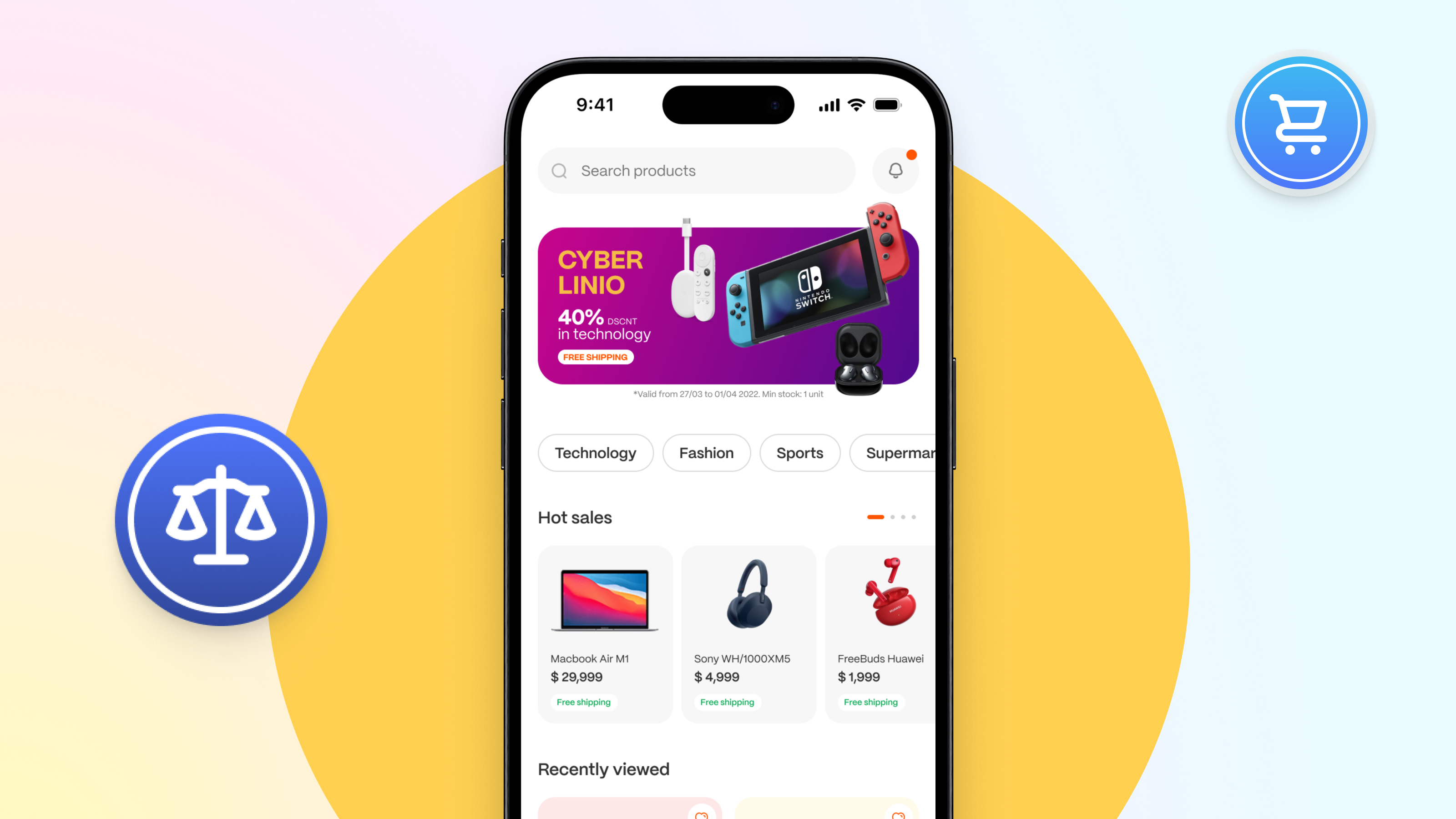
Even the most advanced assistive technologies, such as screen readers, cannot compensate when websites are poorly built. The result is not only limited usability but also the loss of autonomy, privacy and equal participation.
Legally, this is about the prohibition of discrimination and the obligation to ensure equivalent access to digital services – ethically, it is about nothing less than who is considered in the digital society.
The lawsuit is seen as a first in France: for the first time, several major grocery retailers are being jointly sued in emergency proceedings for failing to provide digital accessibility. The outcome could set a precedent for the entire e‑commerce sector.
That courts are prepared to take the issue seriously was already shown by a ruling on 21 May 2024. At that time, the French state was found liable because software used in education was not accessible – again following action brought by the same associations.
The current legal dispute makes one thing clear: digital accessibility is neither a technical detail nor a voluntary add‑on. It determines whether people can shop independently, access information and take partin social life.
Those who design digital services carry responsibility. And those who ignore barriers exclude people.
The question is no longer whether digital accessibility must be implemented – but how consistently.
Digital accessibility decides in e‑commerce whether customers can shop at all. With Eye‑Able’s free WCAG scan, you’ll know within minutes whether your shop is open to everyone – and where improvementsare needed.
Digital accessibility decides whether customers can shop at all. Check your website’s accessibility now – and reduce legal risk before it becomes a problem.
Halfpipe instead of hurdles - Sit’n’Skate
Read storyLet's clarify: The AGID Guidelines of May 15, 2025
Read story:no_upscale():format(png))
The superpower of diversity: What animals reveal about barriers
Read story:no_upscale())
Eye-Able® Audit Update 3.6
Read story:no_upscale():format(png))
Making the Difference - Inclusion vs Integration
Read story:no_upscale():format(png))
How to: Build a truly accessible brand
Read story:no_upscale():format(png))
How inclusive is the digital world?
Read story:no_upscale():format(png))
Accessibility and Privacy: Trust in the Digital World
Read story:no_upscale():format(png))
Back to University: Eye-Able® and the way to a more inclusive education landscape
Read story:no_upscale():format(png))
The EAA 2025: That's what matters!
Read storyDigital Accessibility Worldwide: Breaking Boundaries Together
Read story:no_upscale())
Green Internet: The connection between accessibility and sustainability
Read story:no_upscale():format(png))
:no_upscale():format(png))