:no_upscale())
Why 4 supermarket giants are now facing legal action
Read story
 A new generation of automated accessibility testing
We are thrilled to announce a groundbreaking addition to Eye-Able Audit: a new generation of AI-powered accessibility tests. Until now, our automated engine has reliably caught the barriers that can be measured by clear, analytical rules. With these new AI-powered tests, we go a decisive step further — extending those proven analytical rules to evaluate the parts of a website that, until recently, could only be judged by a person. It is one of the most significant advances we have made to automated accessibility testing, and it is available now.
The result is broader, deeper coverage in a single report. Many of the most important accessibility questions are not simply right or wrong — they depend on context and meaning, which traditional automated checks can only flag for review. Our new AI-powered tests take on exactly these judgement-based areas, assessing the clarity and quality of content the way a real visitor would experience it. That means more barriers identified, fewer issues left sitting in the "needs manual review" pile, and clearer, more actionable results that build directly on the analytical findings you already rely on.
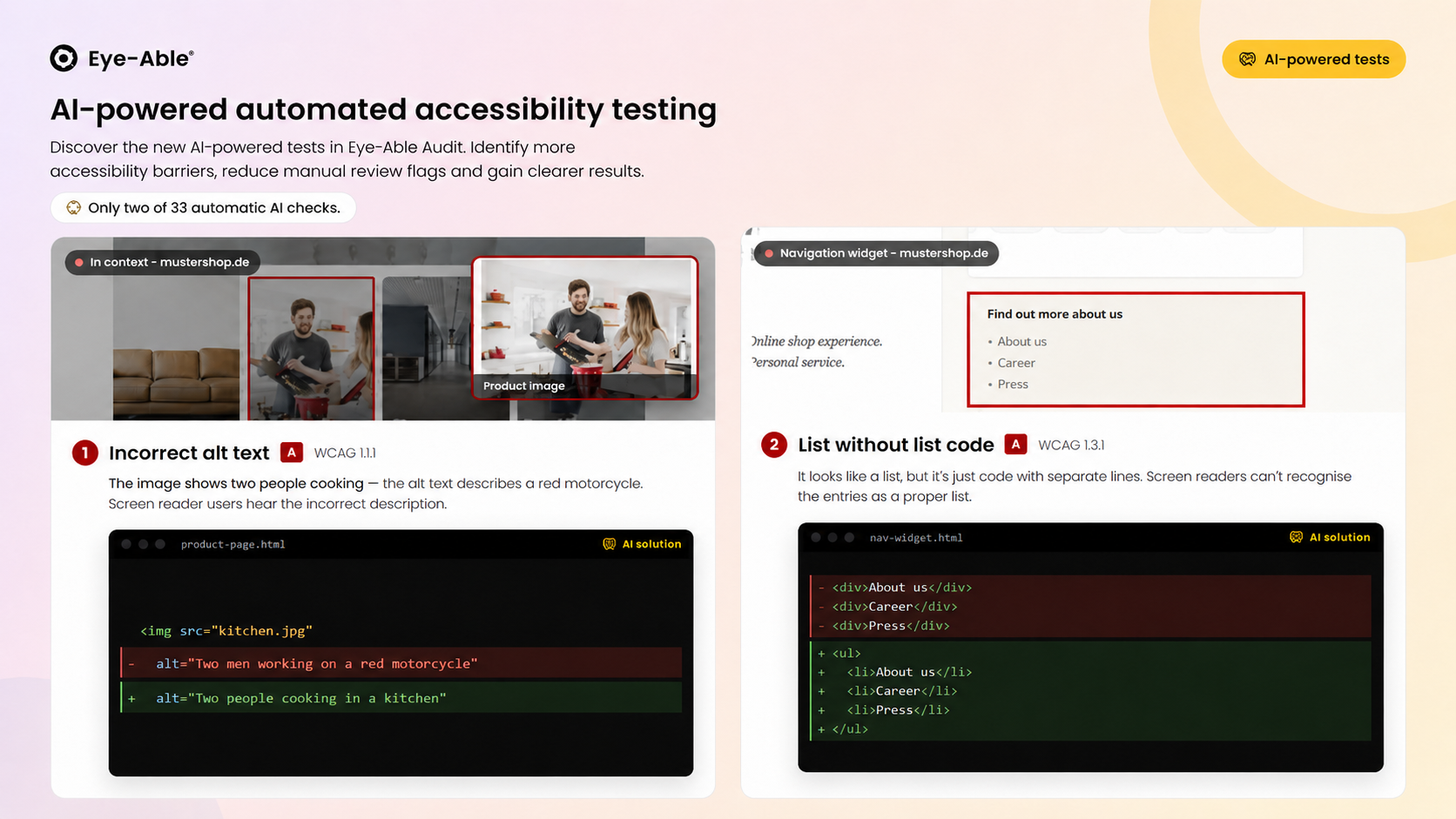
At launch, the AI-powered tests focus on some of the most common and impactful building blocks of any website: images and their alternative text, headings, lists, tables, and links. Get these right and you make a real, everyday difference for people who navigate with screen readers and other assistive technology. And this is only the beginning — over the coming months we will be expanding the AI-powered tests to cover many more areas, steadily widening what can be checked automatically. Best of all, there is nothing new to set up: the results flow straight into your regular report in the Eye-Able dashboard and appear alongside your existing findings, in the same place you already track and manage your accessibility.
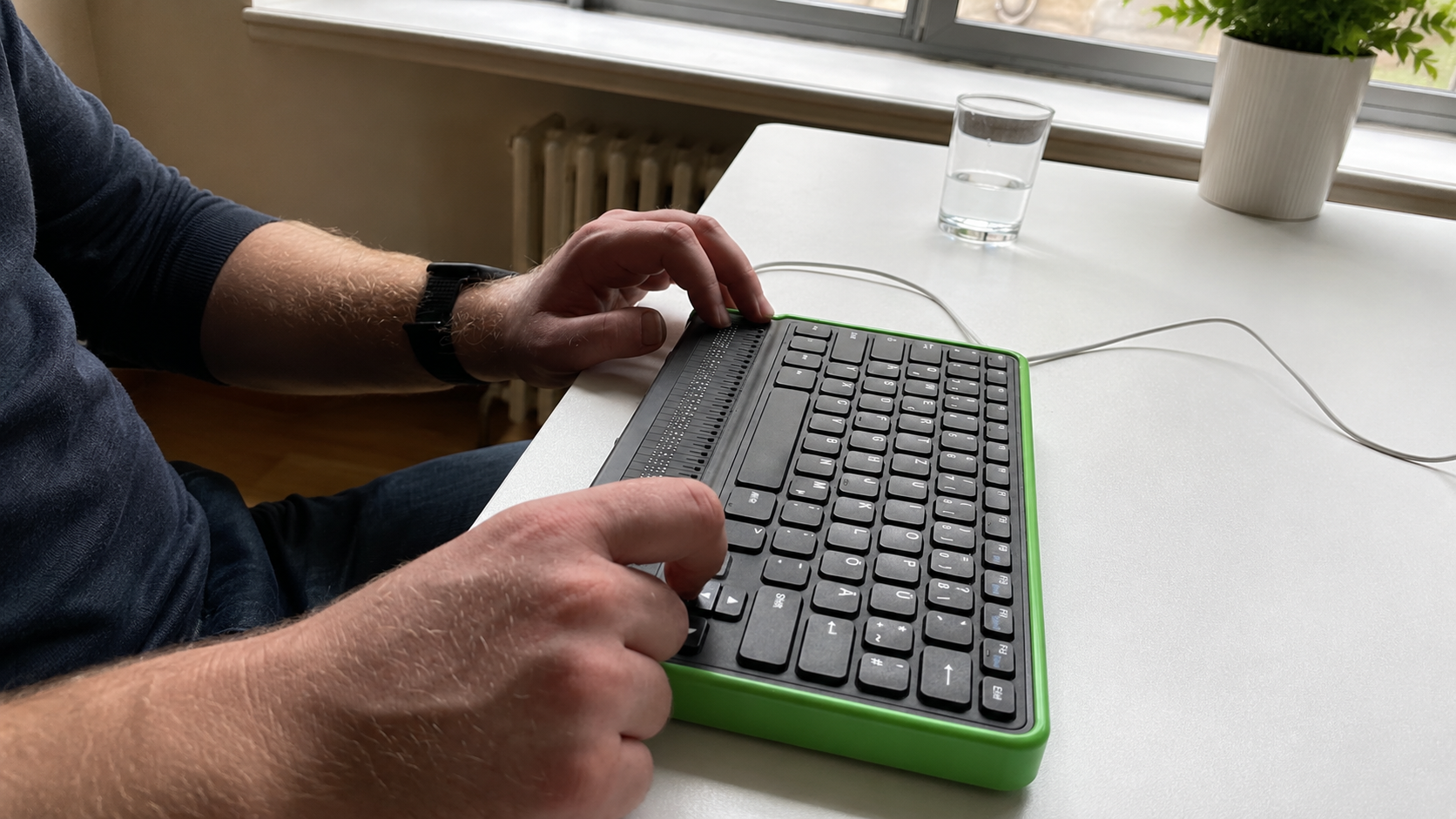
As powerful as this is, we want to be clear about one thing: AI extends our testing, but it does not replace the human element. Genuine accessibility is ultimately about lived experience, and manual testing remains an essential part of any thorough audit — especially for the nuanced, real-world checks where human judgement and the experience of assistive-technology users are irreplaceable. Our approach brings together the speed and scale of automated and AI-powered testing with the depth of expert manual evaluation, so you get the most complete picture of your website's accessibility.
Want to see what the new AI-powered tests could uncover on your site? Let’s talk.
Find out if your website works for everyone—test it for free with Eye-Able!
Why 4 supermarket giants are now facing legal action
Read story:no_upscale())
What is Alt Text for barrier-free reading of images?
Read story:no_upscale():format(png))
Accessibility Statement and what changes from 2025
Read story:no_upscale())
Prepare your BFSG documentation now — Audits start in 2026
Read story:no_upscale())
From individual solutions to platforms: The evolution of digital accessibility
Read story:no_upscale())
Manual accessibility tests: Why you need more than automated testing
Read story:no_upscale():format(png))
The Fashion Nova ruling: $5.15 million as a result of lack of accessibility
Read story:no_upscale())
AGID: Live platform to check accessibility
Read story:no_upscale())
What accessibility means for Trenord
Read story:no_upscale())
The Lega Basket Serie A is focusing on digital accessibility: a new step forward with the support of Infront and Eye-Able.
Read story:no_upscale())
AIL: Digital inclusion thanks to Eye-Able.
Read story:no_upscale())
Stanca Law
Read story:no_upscale():format(png))
:no_upscale():format(png))