:no_upscale():format(png))
Halfpipe instead of hurdles - Sit’n’Skate
Read story
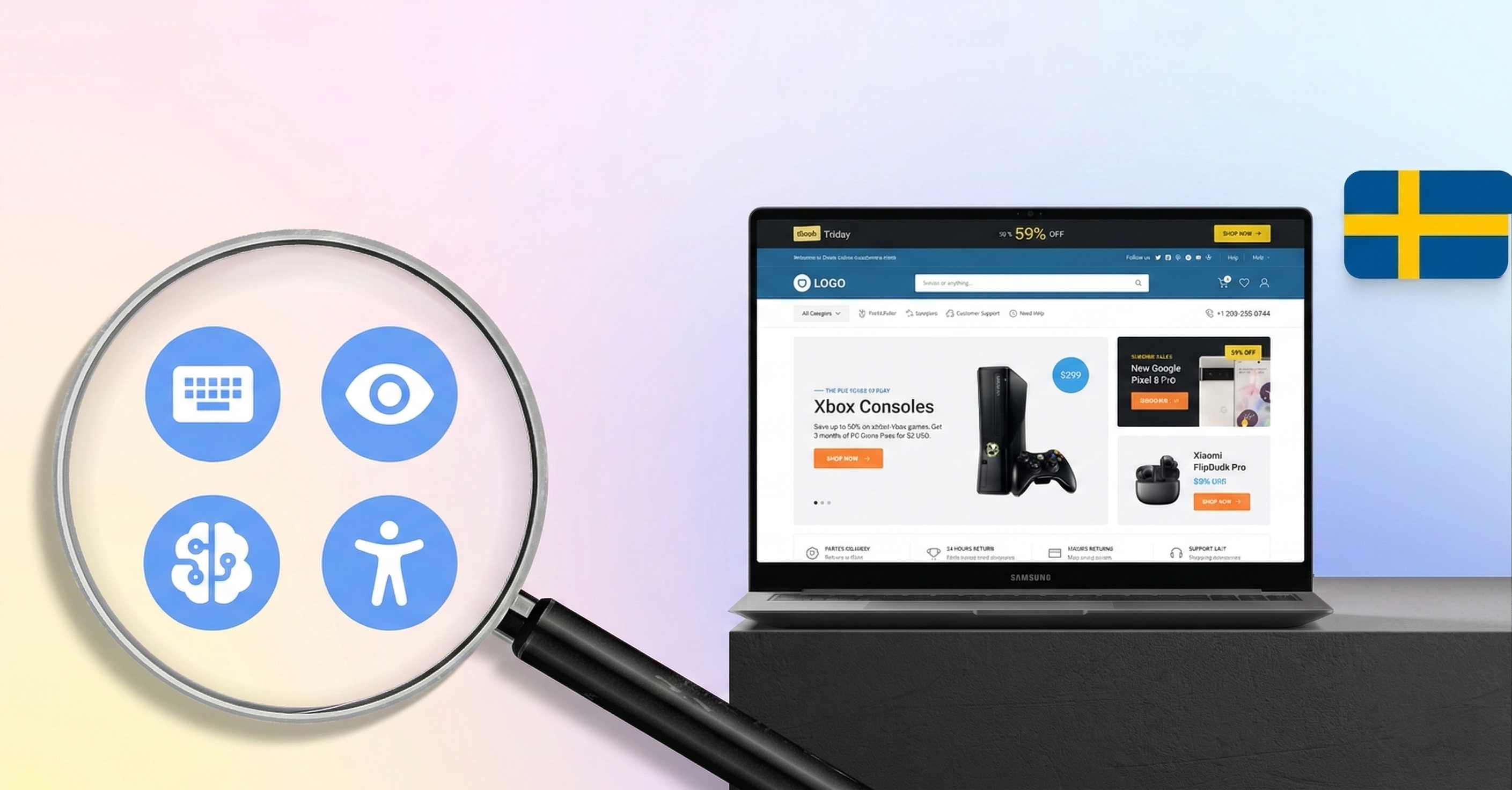 Accessibility audits begin for major online retailers
According to the Swedish supervisory authority Post- och telestyrelsen (PTS), 28 supervisory investigations have already been launched. Among the companies affected are major online retailers such as:
H&M
IKEA
Coop
Biltema
NetOnNet
This selection clearly illustrates how broad the audits are: the digital retail sector is being examined across a wide range of industries, from fashion and furniture to electronics, online supermarkets and online pharmacies.
The audits are part of a supervisory programme run by the PTS that began in 2025 and will continue through 2026. Additional investigations are expected to follow gradually.
The authority is assessing whether websites comply with the accessibility requirements set out in the WCAG guidelines. This includes, among other things:
clear and intuitive navigation
alternative text for images
keyboard accessibility
sufficient colour contrast
accessible forms and checkout processes
The review is based on the four core WCAG principles: websites must be perceivable, operable, understandable and robust. In addition, the authority also checks whether information explaining how the service works is provided in a clear and accessible way.
Accessibility is particularly important in online retail. If key features such as product search or payment are not accessible, people with disabilities may not be able to use these digital services.
If accessibility barriers are identified during an audit, the authority can require companies to address them.
Depending on the situation, measures may include:
deadlines for resolving the issues
formal orders to implement improvements
further legal action or sanctions
Companies may be required to fix identified accessibility barriers. If they fail to do so, further regulatory measures may follow — including fines or restrictions on offering the service.
The developments in Sweden are not an isolated case. In several European countries, enforcement of digital accessibility requirements is beginning to take shape.
In France, for example, the first lawsuits have already been filed against major retailers over insufficient digital accessibility. Among those affected are retailers such as E.Leclerc, Carrefour and Auchan.
Preparations are also underway in Germany to enforce the legal requirements. Auditors are currently being recruited to assess digital services for accessibility on behalf of the market surveillance authorities of the German federal states.
These examples make one thing clear: digital accessibility is no longer a distant future issue in Europe. Authorities, organisations and affected users are increasingly beginning to actively enforce the legal requirements.
For businesses, this means one thing above all: when barriers are identified, they often need to be addressed quickly. Companies that already understand where accessibility barriers exist can respond much faster if audits or complaints arise.
A structured analysis helps to:
identify accessibility barriers systematically
prioritise the necessary improvements
plan implementation across teams
document progress and corrective measures clearly
This documentation can be crucial during an audit. It demonstrates that a company takes accessibility seriously and is actively working to make its digital services more inclusive.
Digital accessibility is therefore increasingly becoming a matter of organisation and preparation. Companies that analyse and document accessibility barriers early are far better prepared if audits or complaints occur.
The developments in Sweden send a clear signal: waiting is not a strategy. Organisations that understand their barriers and can document a clear remediation roadmap are in a much stronger position when audits take place.
Eye-Able helps you systematically identify digital accessibility barriers and document progress in a legally compliant way.
Let’s take a look together at how accessible your digital services currently are.

Digital accessibility decides whether customers can shop at all. Check your website’s accessibility now – and reduce legal risk before it becomes a problem.
Halfpipe instead of hurdles - Sit’n’Skate
Read storyLet's clarify: The AGID Guidelines of May 15, 2025
Read story:no_upscale():format(png))
The superpower of diversity: What animals reveal about barriers
Read story:no_upscale())
Eye-Able® Audit Update 3.6
Read story:no_upscale():format(png))
Making the Difference - Inclusion vs Integration
Read story:no_upscale():format(png))
How to: Build a truly accessible brand
Read story:no_upscale():format(png))
How inclusive is the digital world?
Read story:no_upscale():format(png))
Accessibility and Privacy: Trust in the Digital World
Read story:no_upscale():format(png))
Back to University: Eye-Able® and the way to a more inclusive education landscape
Read story:no_upscale():format(png))
The EAA 2025: That's what matters!
Read storyDigital Accessibility Worldwide: Breaking Boundaries Together
Read story:no_upscale())
Green Internet: The connection between accessibility and sustainability
Read story:no_upscale():format(png))
:no_upscale():format(png))