:no_upscale())
Il nuovo design di HubSpot dice addio all'arancione: le ragioni legate all’accessibilità
Leggi la storia
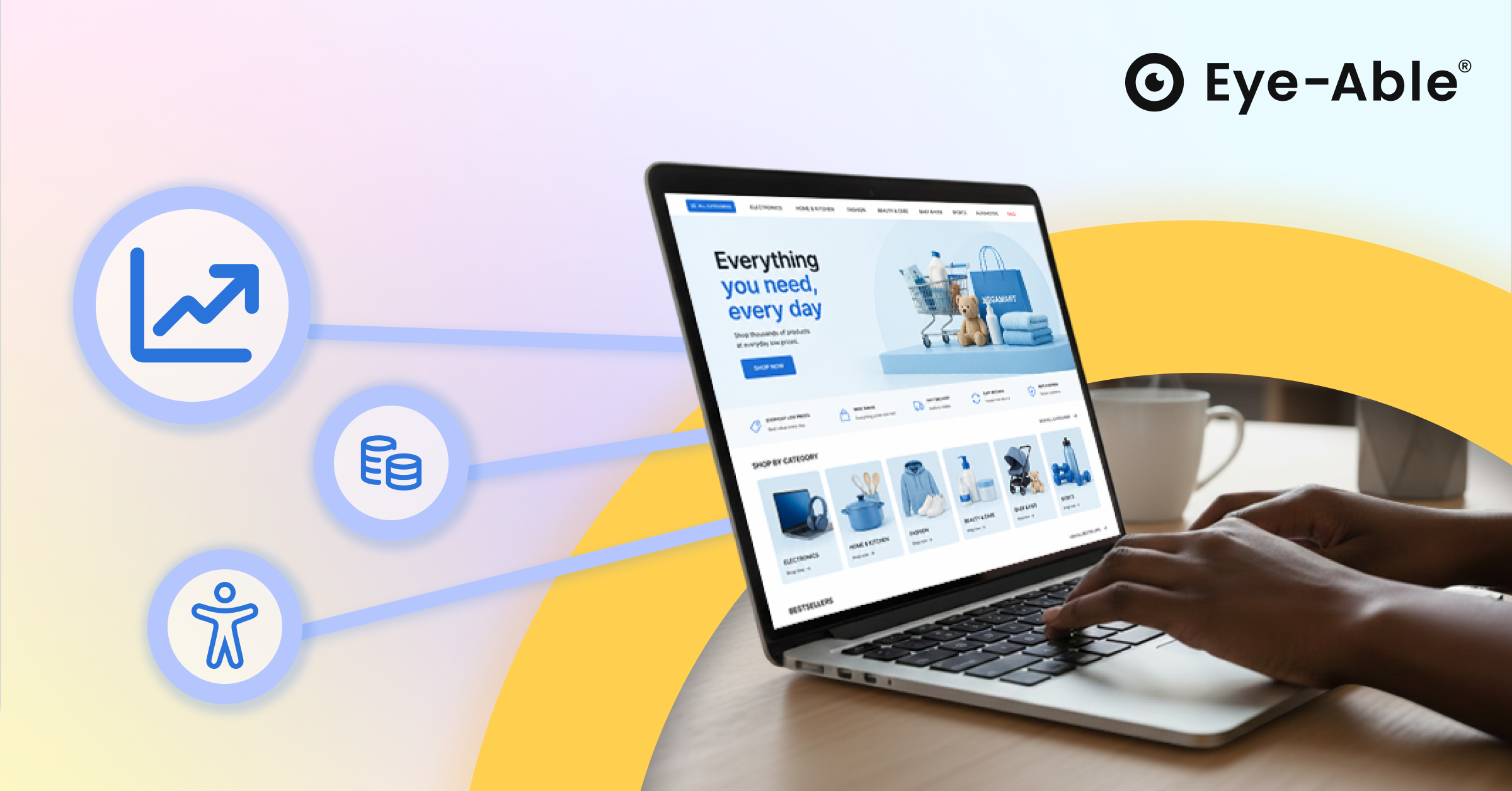 What accessible product data means
Product data encompasses everything that describes a product: titles, descriptive texts, technical attributes, dimensions, materials, images, videos, and documents such as data sheets or user manuals. This data is considered accessible when it can be accessed and understood by everyone, including those using assistive technologies like screen readers.
In practical terms, this means: information is provided as genuine, structured text rather than being hidden within a graphic. Images have descriptive alt text. Attributes are clearly named and consistently maintained. Furthermore, content is written in plain English, ensuring it is understandable without prior knowledge. Accessibility, therefore, doesn't just begin with the design of the page; it starts much earlier, with the quality and structure of the data itself.
Most hurdles in an online shop can be traced back to a single root cause: the product data itself. Wherever information is missing, unstructured, or locked away in images, a barrier is created – often without anyone even noticing.
Typical data flaws include:
Crucial details – such as sizes, ingredients, or technical specifications – are embedded exclusively within a product image, rather than existing as text in the dataset.
Images lack alt text or have meaningless ones like "image_12345.jpg".
Characteristics are conveyed solely through colour (e.g., "the red model") without being designated as a specific attribute.
Data sheets and manuals are provided as inaccessible, unsearchable PDFs.
Attributes are maintained inconsistently, meaning filters and comparison tools fail to work reliably.
Let's look at a concrete example. For a washing machine, details like energy efficiency, capacity, and dimensions are frequently only shown in a product graphic, whilst missing from the actual dataset entirely.
The consequence: these values cannot be technically extracted, filtered, or compared. If, on the other hand, the exact same details are available as clean attributes – Capacity: 8 kg, Energy Efficiency: A, Height: 85 cm – they become machine-readable. A filter for "up to 8 kg" will reliably find the product, and the comparison feature will sort it correctly. It's the exact same information – once as dead pixels, once as usable data.
The tricky part is that these barriers are rarely intentional. They are often the result of organic growth in data structures, where no one considered accessibility from the outset.
Perhaps the most important point: accessibility doesn't just help a small minority. It improves the experience for everyone – an effect commonly known as the dropped kerb effect. Originally designed for wheelchair users, a dropped kerb is equally beneficial to a parent with a pram or a traveller with a wheeled suitcase.
Clean, structured product data directly enhances the user experience:
Clearly named attributes ensure reliable filters and comparison functions.
Well-structured texts are comfortable to read on any device and in any font size, including on mobile phones.
Clear, accessible language lowers the barrier to entry and reduces customer queries and returns.
Descriptive alt texts are helpful if an image ever fails to load, improving orientation for all users.
Making product data accessible doesn't mean building a niche solution for a few. It creates a shopping experience that works for a wider audience, which is ultimately reflected in dwell time, customer satisfaction, and conversion rates.
Structured Content as the Foundation
For product data to be delivered accessibly in the first place, it must first be structured. This is precisely where the key lies. When information is recorded granularly and cleanly – with each characteristic as its own clearly defined attribute – it can be tailored for any channel: for the shop, the app, a marketplace, or indeed for a screen reader.
In practice, a Product Information Management (PIM) system handles this task. It serves as the single source of truth for all product information and ensures that data is consistent, complete, and machine-readable. If, for example, you update an image's alt text or a technical specification in one central place, it automatically becomes correctly available everywhere – in the shop, in the app, and on the marketplace. This single, reliable foundation then generates clean product pages – complete with the semantic structure that assistive technologies require. Structured content is therefore not just a matter of efficiency, but the prerequisite for digital experiences that are truly open to everyone.
A brilliant side effect: much of what makes product data accessible also aids search engines. Structured, semantically tagged content is better understood by web crawlers; descriptive alt text improves image discoverability; and clearly written text boosts relevance. What a screen reader can read out well, search engines and AI-driven assistants can also easily evaluate.
Accessibility, SEO, and conversion are all pulling in the same direction. Instead of treating them as three separate projects, it pays to set up product data correctly the first time and reap the benefits of all three simultaneously.
With legislation such as European Accessibility Act (EAA), digital accessibility has become a legal requirement for many online shops. The Web Content Accessibility Guidelines (WCAG) provide the technical framework for this. However, anyone who views accessibility merely as a compliance tick-box is squandering potential. Accessible product data contributes to the most important goal of all: presenting a product that absolutely anyone can understand and purchase. And at the end of the day, that is a tangible competitive advantage.
Getting started is easier than many people think. Here are a few tried-and-tested steps:
Take stock: Review where information is currently only available in images, PDFs, or unstructured formats.
Add alt text: Describe images so that they convey their content and purpose.
Structure attributes: Maintain characteristics consistently and granularly – ideally in a central PIM system.
Use plain English: Write descriptions clearly and without unnecessary jargon.
Make documents accessible: Ensure data sheets and user manuals are accessible.
Test: Check your pages with the appropriate tools – and ideally with real users.
The key is to treat accessibility not as a one-off project, but as an integral part of ongoing data maintenance. It then becomes second nature rather than a special chore.
Accessible product data is far more than a mere technical detail. It determines whether an online shop works for everyone, regardless of how they access content. Those who maintain their product data in a structured, comprehensive, and clear manner improve not just accessibility, but the entire user experience. A solid data foundation is the best investment you can make: it makes content accessible, search-engine-friendly, and commercially strong – all at the same time.
This guest article was written by Luisa Reichenbacher, Marketing Manager at EIKONA Media GmbH.

Non lasciare che la scarsa accessibilità comprometta la tua portata di mercato. Valuta ora il tuo panorama digitale e colma le lacune nel percorso del cliente.
Il nuovo design di HubSpot dice addio all'arancione: le ragioni legate all’accessibilità
Leggi la storia:no_upscale())
AC Monza sceglie Eye-Able per l'accessibilità digitale
Leggi la storia:no_upscale())
Carrefour multata per sito non accessibile: la sentenza del 2026 dimostra che l’European Accessibility Act è ormai una realtà concreta per e-commerce e servizi digitali.
Leggi la storia:no_upscale())
Eye‑Able al Netcomm Forum 2026: l’accessibilità digitale come nuovo paradigma del digital commerce
Leggi la storia:no_upscale())
L’EAA si applica anche al settore B2B?
Leggi la storia:no_upscale())
Cos’è la Dichiarazione di Accessibilità e cosa cambia dal 28 giugno 2025
Leggi la storia:no_upscale())
Da gennaio 2026 la nuova piattaforma AGID sarà attiva.
Leggi la storia:no_upscale())
L'Accessibilità per Trenord scegliendo Eye-Able Italia
Leggi la storia:no_upscale())
La Lega Basket Serie A inizia il suo percorso di accessibilità con Eye-Able
Leggi la storia:no_upscale())
AIL: Inclusione digitale grazie ad Eye-Able
Leggi la storia:no_upscale())
Legge Stanca
Leggi la storia:no_upscale())
Cosa rende un sito davvero accessibile: 5 azioni concrete
Leggi la storiaContattaci e saremo lieti di aiutarti.
:no_upscale():format(png))
:no_upscale():format(png))