:no_upscale())
Ile naprawdę kosztuje niedostępna cyfrowo strona internetowa?
Przeczytaj historię
 Dlaczego standardy WCAG są ważne
Dostępność cyfrowa stała się niezbędnym elementem obecności online każdej organizacji. Strony internetowe, aplikacje i dokumenty cyfrowe muszą być projektowane tak, aby każdy mógł z nich korzystać — w tym osoby z dysfunkcjami wzroku, słuchu, motoryki i funkcji poznawczych.
W centrum tego wysiłku stoi Wytyczne dotyczące dostępności treści internetowych (WCAG) , opracowany przez Konsorcjum World Wide Web (W3C) Te uznawane na całym świecie standardy określają sposób tworzenia treści cyfrowych, aby zapewnić równy dostęp wszystkim użytkownikom. Zrozumienie trzech poziomów zgodności WCAG – A, AA i AAA – pomaga organizacjom zdecydować, jak daleko mogą się posunąć, aby ich treści były prawdziwie inkluzywne.
Każde wymaganie WCAG opiera się na czterech podstawowych zasadach znanych jako WLAĆ :
Dostrzegalny: Informacje muszą być prezentowane w sposób zrozumiały dla użytkowników, np. poprzez zapewnienie alternatywnych tekstów dla obrazów lub podpisów dla filmów.
Wykonalny: Interfejsy muszą być łatwe w obsłudze i nawigacji, także przy użyciu samej klawiatury.
Zrozumiały: Treść i nawigacja powinny być przejrzyste, przewidywalne i spójne.
Solidny: Strony internetowe muszą niezawodnie współpracować z technologiami wspomagającymi, takimi jak czytniki ekranu i narzędzia do sterowania głosem.

Zasady te pozostają niezmienne w wersjach WCAG 2.0, 2.1 i 2.2, które razem definiują 86 mierzalnych „kryteriów sukcesu”.
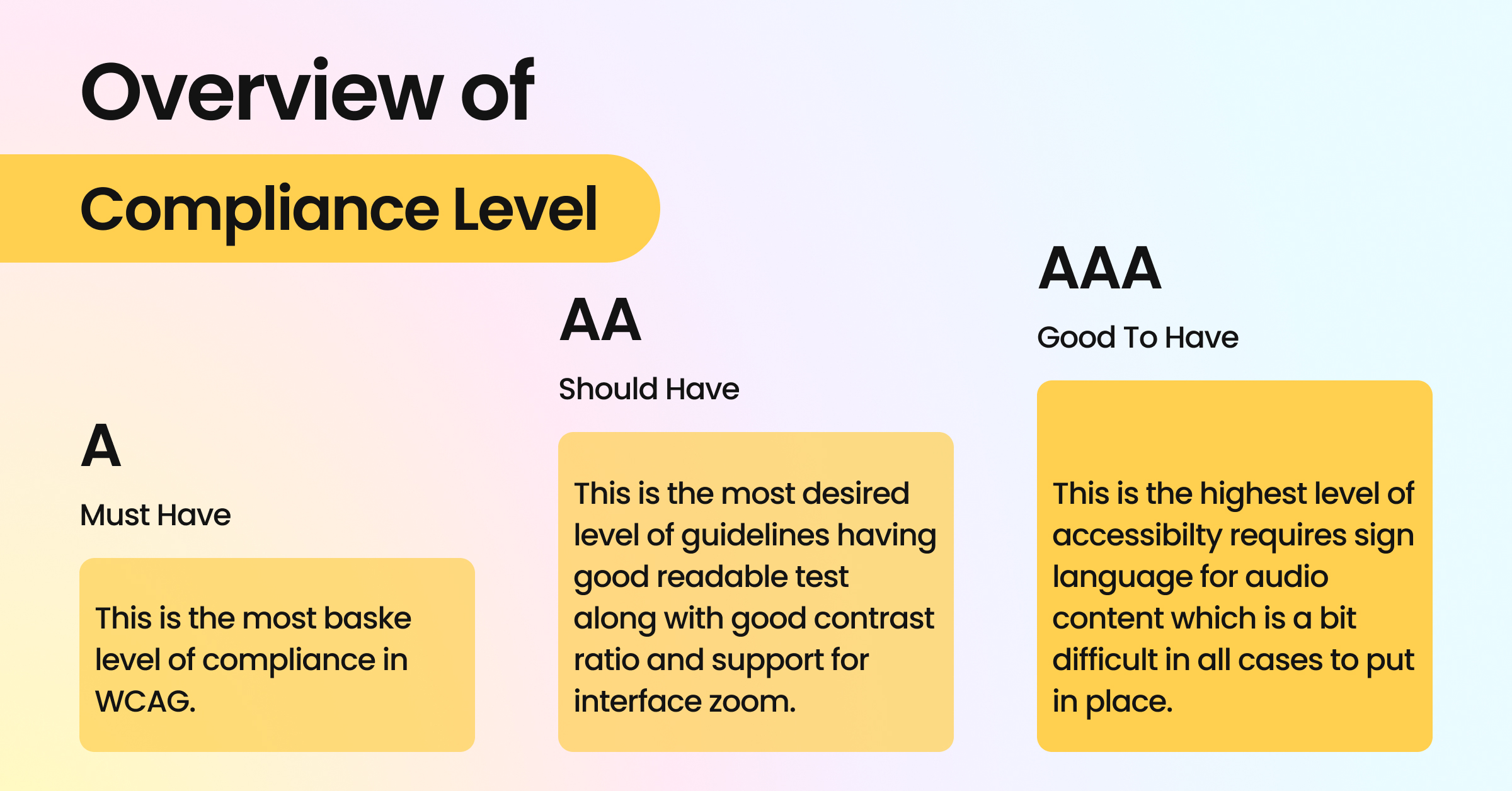
WCAG jest podzielony na trzy poziomy zgodności, które wzajemnie się uzupełniają. Każdy poziom reprezentuje głębsze zaangażowanie w dostępność, przechodząc od minimalnych wymagań do kompleksowej integracji.
WCAG A definiuje podstawowe bariery, które uniemożliwiają osobom z niepełnosprawnościami korzystanie z treści cyfrowych. Spełnienie tego poziomu to minimalny krok w kierunku zapewnienia dostępności.
Przykłady obejmują:
zapewnianie alternatyw tekstowych dla treści nietekstowych
zapewnienie dostępności klawiatury
dodawanie etykiet formularzy i
unikanie koloru jako jedynego sposobu przekazywania informacji.
Witryna, która nie spełnia poziomu A, będzie zawierała krytyczne problemy, które całkowicie blokują użytkowników – na przykład nieoznaczony przycisk, którego czytnik ekranu nie jest w stanie zidentyfikować. Osiągnięcie zgodności z poziomem A zazwyczaj wymaga jedynie drobnych zmian technicznych, ale stanowi podstawę dla wyższych standardów.
WCAG AA stał się uznanym punktem odniesienia w zakresie dostępności cyfrowej na całym świecie. Większość przepisów i regulacji dotyczących dostępności — w tym Europejski Akt w sprawie Dostępności (EAA) , ten Barrierefreiheitsstärkungsgesetz (BFSG) w Niemczech i Ustawa o dostępności dla mieszkańców Ontario z niepełnosprawnościami (AODA) w Kanadzie — ten poziom należy traktować jako wymagany standard.
Poziom AA rozszerza podstawy, zapewniając użyteczność i czytelność dla szerokiego grona użytkowników.
Przykłady obejmują:
zachowanie wystarczającego kontrastu kolorów między tekstem a tłem
zapewnianie przejrzystych struktur nagłówków
oferując widoczne wskaźniki ostrości
zapewnienie responsywnego projektu i
dostarczanie komunikatów o błędach, które prowadzą użytkowników przez formularze.
Osiągnięcie poziomu WCAG AA oznacza, że witryna spełnia wszystkie kryteria sukcesu poziomu A i AA — łącznie około 50 poniżej WCAG 2.2 Dla większości organizacji poziom ten reprezentuje idealną równowagę między wykonalnością a inkluzywnością.
Ramy prawne w całej Europie egzekwują obecnie te zasady. Od czerwca 2025 r. obowiązuje Europejski Akt w sprawie Dostępności. WCAG 2.2 Poziom AA standard dla stron internetowych sektora publicznego i prywatnego i kluczowych usług cyfrowych we wszystkich państwach członkowskich UE.
Poza regulacjami, motywacja jest jasna: dostępne strony internetowe zapewniają lepsze doświadczenia użytkownikom. Badania przeprowadzone przez WebAIM i brytyjski Urząd Statystyk Narodowych pokazują, że przejrzyste nagłówki, spójna nawigacja i czytelne współczynniki kontrastu nie tylko pomagają użytkownikom z niepełnosprawnościami, ale także poprawiają zaangażowanie we wszystkich grupach demograficznych.
WCAG AAA reprezentuje najwyższy poziom dostępności. Wymaga spełnienia wszystkich kryteriów poziomów A i AA oraz dodatkowego zestawu 28 rozszerzonych wymagań.
Kryteria AAA obejmują:
wysoki współczynnik kontrastu (co najmniej 7:1)
tłumaczenie na język migowy filmów,
rozszerzone audiodeskrypcje i
uproszczony język dla złożonych informacji.
W3C nie zaleca poziomu AAA jako celu dla całych witryn internetowych ponieważ niektórych kryteriów nie da się zastosować uniwersalnie.
Jednak wdrożenie konkretnych funkcji AAA dla kluczowych treści — takich jak procesy realizacji transakcji, formularze medyczne czy portale klientów — może przynieść znaczącą różnicę.
Organizacje, które łączą zgodność z normami AA z wybranymi usprawnieniami w zakresie norm AAA, wykazują prawdziwe zaangażowanie na rzecz doskonałości w zakresie integracji i dostępności.
Dostępność jest obecnie wymogiem prawnym w wielu krajach świata. W UE EAA I BFSG ustalić jasne obowiązki. W Stanach Zjednoczonych Ustawa o Amerykanach z Niepełnosprawnościami (ADA) coraz częściej jako punkt odniesienia technicznego stosuje się normę WCAG 2.1 AA, co potwierdzają niedawne orzeczenia Departamentu Sprawiedliwości.
Niezastosowanie się do wymogów dostępności może prowadzić do ryzyka utraty reputacji i strat finansowych. Od 2020 roku co roku wnoszone są tysiące pozwów dotyczących dostępności cyfrowej związanej z ustawą ADA, które dotykają organizacje każdej wielkości. Prawdziwy problem wykracza jednak poza kwestie zgodności: niedostępne treści wykluczają użytkowników i są sprzeczne z zasadą równego dostępu.
Według Światowej Organizacji Zdrowia około 1,3 miliarda ludzi — 16 procent światowej populacji — żyje z niepełnosprawnością. W samym Wielkiej Brytanii szacuje się, że siła nabywcza gospodarstw domowych z niepełnosprawnościami wynosi ponad 270 miliardów funtów rocznie .
Badania pokazują, że niedostępne sklepy internetowe tracą rocznie miliardy dolarów potencjalnych przychodów. Około 70 procent użytkowników niepełnosprawnych porzucają strony internetowe, które uważają za trudne w obsłudze.
Z drugiej strony, dostępne marki konsekwentnie przewyższają konkurencję pod względem lojalności i zadowolenia klientów. Projektowanie inkluzywne zwiększa współczynnik konwersji i wzmacnia reputację marki, jednocześnie zmniejszając potrzebę korzystania z pomocy technicznej — ponieważ użytkownicy mogą wykonywać zadania samodzielnie.
Dostępność przynosi korzyści wszystkim użytkownikom, nie tylko tym z niepełnosprawnościami. Funkcje takie jak nawigacja za pomocą klawiatury, responsywność mobilna i przejrzysta struktura poprawiają użyteczność dla osób przeglądających strony na smartfonach, pracujących w warunkach słabego oświetlenia lub z przejściowymi ograniczeniami.
Wyszukiwarki nagradzają również przystępny projekt. Strony internetowe, które przestrzegają zasad WCAG, osiągają lepsze wyniki w wynikach wyszukiwania, ponieważ dostępność pokrywa się z najlepszymi praktykami SEO — opisowy tekst alternatywny, ustrukturyzowane nagłówki i semantyczny kod HTML pomagają wyszukiwarkom zrozumieć treść.
Pomimo powszechnej świadomości, dostępność w sieci pozostaje ograniczona. Analizy WebAIM i AudioEye pokazują, że ponad 95 procent stron głównych nadal zawierają wykrywalne błędy WCAG 2.
Najczęstszymi problemami są brak opisów obrazów, niski współczynnik kontrastu i nieoznakowane pola formularzy.
Ponieważ obecnie tylko niewielka część stron internetowych spełnia standardy AA WCAG, organizacje, które podejmą działania już teraz, uzyskają wyraźną przewagę konkurencyjną.
Zgodność z WCAG AA jest możliwa dzięki ustrukturyzowanemu podejściu. Większość organizacji stosuje trzy główne fazy:
Załóż fundację: Napraw krytyczne problemy, takie jak brak tekstu alternatywnego, niedostępne formularze lub słaba nawigacja za pomocą klawiatury. Zautomatyzowane narzędzia, takie jak Raport Eye-Able może pomóc zidentyfikować typowe błędy, ale aby wykryć resztę, konieczne jest przeprowadzenie testów manualnych.
Osiągnij poziom AA: Zadbaj o kontrast kolorów, widoczność fokusu, spójną nawigację i obsługę błędów. Przetestuj swoją witrynę na różnych urządzeniach i przy użyciu różnych metod wprowadzania, aby zapewnić responsywność i kompatybilność z technologiami wspomagającymi.
Dodaj wybrane ulepszenia AAA: Nadaj priorytet kluczowym obszarom, takim jak formularze, logowanie czy płatności. Zwiększony kontrast, uproszczona treść i dodatkowe opisy multimediów zapewniają użytkownikom znaczące korzyści.
Dostępność to nie jednorazowy projekt, lecz ciągły proces. Regularne audyty, opinie użytkowników i stały monitoring pomagają utrzymać i stale ulepszać standardy dostępności.
Nie wiesz, od czego zacząć? Sprawdź dostępność swojej witryny w 2 minuty – z naszym bezpłatna kontrola dostępności WCAG .
W3C opracowuje nową generację standardów, znaną jako WCAG 3.0 , która wykraczać będzie poza treści internetowe i obejmie aplikacje mobilne, oprogramowanie, rzeczywistość wirtualną i urządzenia podłączone do sieci.
Istniejące poziomy zgodności WCAG 2.2 – A, AA i AAA – nie zostaną przeniesione bez zmian Nowy model proponuje znacznie bardziej elastyczne podejście do pomiaru dostępności, odchodzenie od sztywnego systemu zaliczone/niezaliczone w kierunku skali stopniowej, która pozwala na bardziej szczegółową ocenę.
Jednym z szeroko dyskutowanych pomysłów jest wprowadzenie poziomów ratingowych, takich jak Brązowy, Srebrny i Złoty, zastępujących obecne poziomy A/AA/AAA. Kategorie te nie zostały jednak jeszcze formalnie zdefiniowane jako ostateczne standardy – są one jedynie badane jako potencjalne elementy nowych ram.
W wersji WCAG 3.0 wprowadzono również zaktualizowane metody oceny kontrastu kolorów, w tym Zaawansowany algorytm kontrastu percepcyjnego (APCA) , który ma zapewniać dokładniejsze wyniki w nowoczesnych środowiskach projektowych, np. w trybie ciemnym.
Standard ten nadal ma formę roboczą i nie został jeszcze oficjalnie przyjęty jako rekomendacja W3C.
Co ważne, standard WCAG 2.2 nadal jest aktualny i powszechnie uznawany. Organizacje, które obecnie spełniają wymagania poziomu AA, są już dobrze przygotowane na przyszłe zmiany.
Zrozumienie poziomów zgodności WCAG to coś więcej niż tylko ćwiczenie techniczne. Poziom A zapewnia podstawowy dostęp, poziom AA zapewnia dostęp inkluzywny dla większości użytkowników, a poziom AAA reprezentuje doskonałość w zakresie dostępności.
Wdrażając WCAG AA już teraz, organizacje nie tylko spełniają oczekiwania określone w Europejskim Akcie w sprawie Dostępności, ale także tworzą środowiska cyfrowe, które są bardziej użyteczne, inkluzywne i przyszłościowe.
Dostępny design buduje zaufanie, wzmacnia relacje z klientami i odzwierciedla odpowiedzialność społeczną. W świecie, w którym mniej niż cztery procent stron internetowych jest uznawanych za dostępne, podjęcie działań już dziś wyróżnia Twoją organizację.
Gotowy na kolejny krok? Przetestuj swoją witrynę, aby sprawdzić, czy spełnia najważniejsze kryteria WCAG AA i odkryj, jak drobne usprawnienia mogą mieć trwałe znaczenie dla wszystkich użytkowników.
Ile naprawdę kosztuje niedostępna cyfrowo strona internetowa?
Przeczytaj historię:no_upscale())
Zmiany w zespole kierowniczym w Eye-Able: Oliver Berchtold
Przeczytaj historię:no_upscale())
Jak sprawić by Twoją strona internetowa była zgodną z przepisami o Dostępności Cyfrowej w 8 krokach
Przeczytaj historię:no_upscale())
Wezwania dotyczące dostępności w Austrii? Co europejskie firmy muszą wiedzieć już teraz
Przeczytaj historię:no_upscale())
Przypadek Carrefoura: Czego naprawdę uczy nas o dostępności
Przeczytaj historię:no_upscale())
Ręczne testy dostępności: Dlaczego potrzebujesz czegoś więcej niż testów automatycznych
Przeczytaj historięSkontaktuj się z nami, a chętnie Ci pomożemy.
:no_upscale():format(png))
:no_upscale():format(png))